

Training delivery
What is on-demand learning?
Training delivery
On-demand learning
On-demand learning lets people find the specific knowledge or skills they need at the moment and place they need them.

Definition
On-demand learning is an approach that lets people find the specific knowledge or skills they need at the moment and place they need them. It often responds directly to a pressing work or situational demand.
Key takeaways
- On-demand learning gives people specific knowledge or skills when and where they need them, often for a pressing work demand
- Learners choose their own route, so they need to assess themselves and pick their next task
- Phone and tablet apps widen the scope for learning anytime and anywhere
- Completion is generally lower in digital learning than in classroom courses
Why on-demand learning matters
Training teams want people to get help the moment a work task calls for it. On-demand learning increasingly ties learning to credentials and employability through modular systems built on platforms. One caveat: a review of digital learning research finds completion rates generally lower than in classroom courses, though learners retain more. For a related approach, see our guide to learning at your own speed.
How on-demand learning works
The approach rests on immediacy, response to context, and modular content centered on the learner.
- Content is there at the point of need
Targeted material sits ready so people can open it in the moment, wherever they are. Phone and tablet apps add to the potential for anytime learning and anywhere learning. - Learners choose their own pathway
Each person can pick a route through the material that suits what they need to learn. - Platforms and modular content enable it
Digital learning platforms, AI tutoring systems, and stackable micro-credentials make this approach possible. - Self-direction skills do the steering
Learners have to judge their own level and pick their next task, both self-directed learning skills. Subject skills depend on these, so learners who are missing them have to develop them as well. - One study added advice on task choices
The study’s environment, built to grow self-direction and subject skills together, advised novices on their self-ratings and next tasks. Learners followed the advice in 78% of their task choices and mostly rated it as appropriate [3].
On-demand learning example
A sales operations lead at a wholesale distributor is rolling out a new quoting tool. He gives reps short how-to modules, each on one task, such as building a quote or applying a volume discount. Reps open a module when a customer request comes up and choose their own route through the library. A quick self-rating at the start of each module helps them judge their level and decide what to study next.
How LearnWorlds supports this
On-demand learning in LearnWorlds
How Hacking HR uses on-demand learning
Hacking HR turned content from 40+ live programs into on-demand courses that HR professionals can take anytime, anywhere. Report data showed the courses were too long, so the team cut content by over 50%, which boosted completion rates.
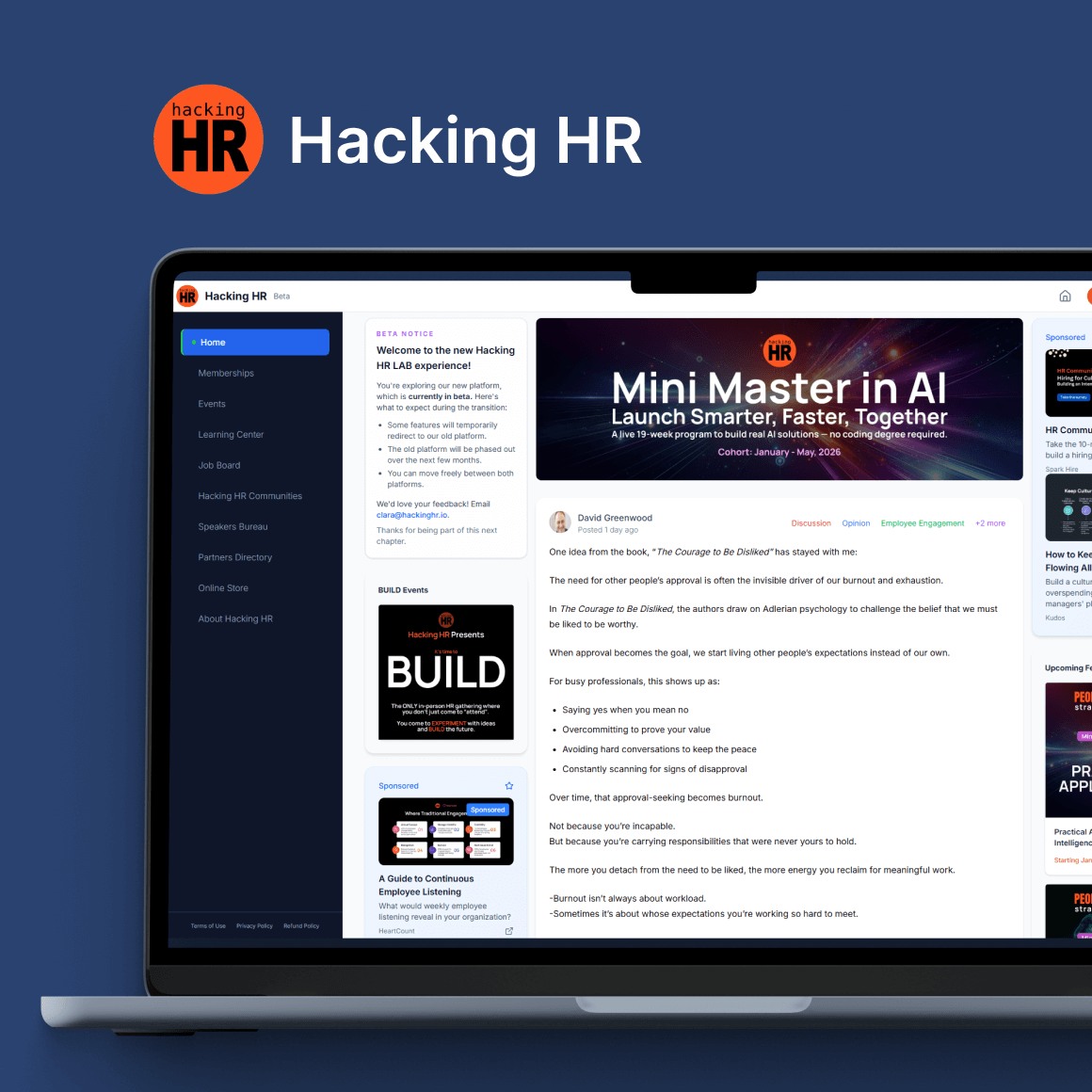
“Based on feedback and the completion rates, we realized this is really too long. If it’s going to be on-demand and flexible, and we want people to complete it, we need to slice and dice.”

Danielle LaPage, Chief Learning Officer, Hacking HR
FAQ
Companies give on-demand learning more weight as awareness of skill gaps grows, along with the need to retrain staff or build new skills.
On-demand learning puts targeted knowledge or skills within reach when a need arises. One edited volume ties it to a wider move toward learning built from modules that are kept up to date and respond to demand. It sees this move especially in vocational and workforce education.
References
- Liu, D., Prinsloo, P., Kanwar, A. S., Kalim, U., Zhang, Y., & Chen, J. (2027). Introduction: Reimagining On-Demand Learning in a Changing World. Springer, On-Demand Learning for Lifelong and Responsive Education.
- CIPD (2021). Digital learning in a post-COVID-19 economy: a literature review. CIPD.
- Taminiau, E. M. C., Kester, L., Corbalan, G., Spector, J. M., Kirschner, P. A., & Van Merriënboer, J. J. G. (2015). Designing On-Demand Education for Simultaneous Development of Domain-Specific and Self-Directed Learning Skills. Journal of Computer Assisted Learning (ERIC).
Related terms
Training delivery
Asynchronous learning
Asynchronous learning is an instructional model where learners work through prepared materials at a time they choose, without meeting a trainer live.
Read definitionTraining delivery
Just-in-time learning
Just-in-time learning gives people the information they need to complete a task at the moment they need it, not well in advance.
Read definitionLearning science
Self-directed learning
Self-directed learning is a process where learners take primary responsibility for planning, carrying out, and evaluating their own learning.
Read definitionInstructional design
Personalized learning
Personalized learning is instruction whose pace and teaching approach fit each learner's needs, with goals and content that may vary too.
Read definitionPublished:
Last Update: