
Analytics
Track ad conversions from your school with the Facebook Pixel LMS integration
Send registrations, checkouts, and purchases from your school to Meta with the Facebook Pixel LMS integration. Then retarget visitors and build audiences for your ads.
TL;DR
With the Facebook Pixel integration, you paste your Meta Pixel code once and LearnWorlds sends school events to Meta. Use them to measure conversions, retarget visitors, and build audiences for your ads.
Stop guessing who visits. PageView records where visitors go across your school
Stop exporting signups. CompleteRegistration fires when someone registers, with the login type
Stop rebuilding audiences by hand. Pixel events build Custom Audiences for retargeting
Best for: Course creators and marketing teams who run Meta ads to sell courses.
Available on all paid plans. Server-side events through automations need the Learning Center plan or higher.
What you can do with Facebook Pixel and LearnWorlds
Measure course purchases
Each purchase on the LearnWorlds payment page sends a Purchase event to Meta. It carries the product name and ID, the product type, and the price and currency.
Follow the checkout path
Turn on View Item, Add to Cart, and Begin Checkout events. Each step a buyer takes before paying then reaches your pixel.
Count free trials as leads
Send a Lead event to Meta when a user starts a free trial in a subscription plan.
Send events from automations
On Learning Center or higher, set up automations in your school that send additional server-side events to your pixel.
How LearnWorlds and Facebook Pixel integrate
See which school events reach your pixel. The Automatic row fires once the pixel is active, and Conditional rows need their event setting turned on first.
| LearnWorlds | Facebook Pixel | Type of trigger |
|---|---|---|
| Visitor loads a page in your school | PageView event records the page and the visitor’s path | Automatic |
| User registers with email or a social login | CompleteRegistration event with the registration type | Conditional |
| User starts a free trial in a subscription plan | Lead event | Conditional |
| Purchase on the LearnWorlds payment page | Purchase event with product details, price, and currency | Conditional |
| User enrolls, views an item, or moves toward checkout | ViewContent, AddToCart, or InitiateCheckout event | Conditional |
What teams ask before connecting
Which events does the Facebook Pixel track automatically: page views, purchases, or both?
Page views track automatically, and seven more events each have their own setting to turn on. These cover registrations, free trials, and purchases. The rest are enrollments and item views, plus add to cart and begin checkout. Purchase events count purchases on the LearnWorlds payment page, not manual enrollments.
Do learners need to accept cookies before the Pixel fires?
Yes. Users must accept the Marketing Cookies in your school for the Facebook Pixel to work properly.
How to set up the LearnWorlds and Facebook Pixel integration
You need a Facebook account. Create the pixel in Meta Events Manager, then paste its code into LearnWorlds and your school starts sending events.
1. Open Meta Events Manager
In Events Manager, click Connect data sources and select Web. Then click Connect. Add your dataset name and click Create. Requires: a Facebook account.
2. Add your website
Enter your website URL, click Check, and choose the Do it yourself option. Then choose to connect with Meta Pixel only.
3. Copy your pixel code
Open your data source, click Set up meta pixel, then Install Code Manually. Copy the 15- or 16-digit code next to init in the fbq function.
4. Activate Facebook Pixel
In LearnWorlds, open Settings > Integrations > Analytics and activate Facebook Pixel.
5. Paste the code and save
Paste the tracking code into the text field and click Save. For the full setup guide, see the Facebook Pixel help article.
What the Facebook Pixel integration handles automatically
Record page views
LearnWorlds automatically sends a PageView event when a visitor who accepted Marketing Cookies loads a page.
| What LearnWorlds handles automatically | What your team configures |
|---|---|
| Sends PageView events as visitors move through your school | Creates the pixel and pastes its code in Analytics settings |
| Sends product details, price, and currency with each purchase | Turns on the registration, purchase, and checkout events it needs |
| Sends a Purchase event for every purchase, whatever the traffic source | Sets up custom conversions or UTM tracking to split purchases by channel |
| Includes the registration type in CompleteRegistration events | Builds Custom Audiences and Lookalike Audiences in Meta |
Who uses the Facebook Pixel integration and how
Course creators retargeting checkout visitors
Turn on Add to Cart and Begin Checkout events, then build a Custom Audience in Meta of people who added a course to the cart.
Marketing teams finding buyers like their best
Purchase events tell Meta who bought. Create a Lookalike Audience from those buyers to reach people similar to your best customers.
What our customers are saying
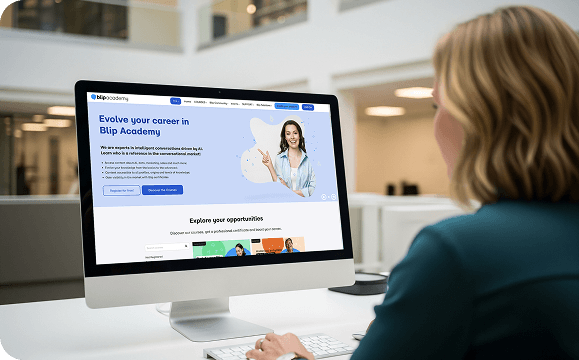
“If in a week our team could onboard five companies, now they can onboard ten companies in one training session, in one day.”

Lara Oliveira, Community Learning Experience Specialist, Blip
“I love their customer support, which is top tier. I always receive quick replies, and they always solve my issues. When I first joined LearnWorlds, the platform was very simple to understand and get by. We’ve been going strong and love it!”

“The user interface is excellent, both on the main website and inside the virtual classroom. The integrations are incredibly comprehensive—so much so that after more than two years on the platform, I still haven’t explored them all.”
“I like that LearnWorlds provides me with a fully functional website where I can offer my students self-study resources and a community chat. The team is responsive and professional, and they really care about what they are doing.”
“I really appreciate the customer service at LearnWorlds; it’s been incredible and every time I’ve reached out, they’ve been expedient and gone above and beyond, even when they didn’t have something yet but were working on it.”
“The platform has been easy to set up and navigate. Plus, the onboarding calls have been helpful and tech support is extremely responsive! I am so pleased So far, the tech support has been worth every penny I’ve paid!”
“The platform integrates our website, funnels, marketing, and learning system all in one place, which is super convenient. I also appreciate their regular updates and the support team, which is extremely responsive.”
“I’ve been very impressed with LearnWorlds’ level of service so far. They’ve been very helpful with technical issues I don’t have the skills to deal with. It’s easy to use, and the initial setup was pretty easy.”
“We love how it has improved communications with our students. Daily tracking of student activity is vital to our programs and the reporting options help us see where all students are in the push of a button.”
“The wide range of features, responsive support, and regular platform updates. The value is good for the price, especially considering the range of features, regular updates, and responsive customer support.”
“The platform is really configurable, giving us a huge amount of flexibility about how to lay out our course. It’s allowed us to deploy our course in a drip feed format, which is fantastic for our learners.”
“I love how LearnWorlds makes it easy to write and implement my training materials. The platform’s support team is fantastic, providing clear answers quickly, which has been really useful.”
“What I like most about LearnWorlds is how easy and intuitive it is to use. I also really like the possibility to customize the school and make it fit your own style and brand.”
“Many features and almost everything can be customized, which makes it very easy to configure it the way you like.”
“The site is very user friendly and easy accessible. UI/UX is wonderful. The onboarding was also very easy”
“There are a lot of unique and user friendly features. The system is very customizeable.”
FAQs
Every paid plan includes it, from Starter through High Volume and Corporate. Server-side events through automations are the exception and need Learning Center or higher.
Yes. You activate it in LearnWorlds under Settings > Integrations > Analytics and paste your pixel’s tracking code. Browse the other LearnWorlds integrations for the rest of your stack.
Not on its own. Every purchase in LearnWorlds triggers a Purchase event, whatever the traffic source. An expert can help you split purchases by channel with custom conversions, UTM tracking, or event filters in Meta Ads Manager.
They let you set up automations in your school that send additional events to your Facebook Pixel, beyond the standard list. See the Meta Pixel automations help article for setup.
Yes. You create the pixel in Meta Events Manager with your Facebook account, then paste its tracking code into LearnWorlds.
Yes, if you advertise on Meta. One pasted code sends page views and the purchase and checkout events you turn on. You can then retarget visitors, build Lookalike Audiences, and measure conversions across devices.
Published:
Last Update: