Table of Contents
Key takeaways
- White-label courses are pre-built courses you can legally rebrand and resell under your own business name, and also launch them faster without creating content from scratch
- The broader elearning market is already massive (estimated to reach $279.3 billion by 2029), which is why speed and positioning matter
- This approach is best for entrepreneurs, training providers, agencies, and internal-training teams that want to expand their catalog quickly and validate demand
- To choose the right courses, prioritize audience fit and quality signals (eg SCORM, updates, production) and look for clear licensing terms before you invest
- If you want one platform to brand, host, sell, and scale your course business and license content, LearnWorlds is the platform built for it
Looking for white-label courses to resell under your own brand? There are plenty of ready-made course providers that let you customize existing educational content, add your branding, and sell it to your audience.
Using white-label courses can save you the time and cost of creating training content from scratch while helping you launch your elearning business faster.
In this guide, we’ll explore some of the best places to find white-label online courses to resell, what to look for when choosing a provider, and how to start selling them under your own brand.
What are white-label courses?
White-label courses are pre-made educational resources that you purchase, rebrand, and resell under your own company name without attributing the original creator.
They’re a great option if you want to reuse professionally-made elearning content and save significant time, money, and resources to create your course content from the ground up.
A few examples of white-label courses to resell include:
- Professional development courses
- Digital marketing courses
- Language courses
- Health and wellness courses
- Technology and programming courses
With white labeling, you can start with professionally designed course content and adapt the branding to your business. This leaves you more time to grow your community, develop your pricing strategy, and market your courses.
How does white-label course reselling work?
There are generally two parties involved in white-label course reselling:
- Sellers create the original course content and make it available for licensing
- Resellers, like you, license that content and sell it to their own audience
White-label course sellers can include instructional designers with reusable course libraries, corporate training providers, coaches and consultants, and education companies creating ready-to-license learning materials.
For sellers, licensing can create recurring revenue and extend the reach of their content. For you as the reseller, it provides ready-made educational content you can add to your course catalog without building every course yourself.
White label vs PLR courses vs MRR courses
White-label, private label rights (PLR), and master resell rights (MRR) courses can all give you a way to sell ready-made course content.
The difference is what you’re allowed to change, how you can brand it, and what rights you can pass on to your customers.
| Type | Edit and branding rights | Attribution required | Resale rights | |
|---|---|---|---|---|
| PLR courses | Usually flexible, allowing you to edit and rebrand most of the content | Sometimes required to credit the creator / depends on the license | May have limitations depending on the license | |
| White-label courses | Typically allow you to add your own branding, though editing the core content may be more limited | No attribution required | You can sell the course under your own brand, subject to the provider’s license | |
| MRR courses | Usually limited, with fewer options to edit or rebrand the original content | Depends on the license | You can resell the course and, depending on the license, give your buyers the right to resell it too | |
PLR courses generally give you the most freedom to change the course itself. Depending on the license, you may be able to rewrite lessons, change the design, add your branding, and package the material into a new product.
MRR courses are mainly about resale rights. As a course creator, you can buy an MRR course and resell it to your audience. Depending on the license, your buyers may also get the right to resell the course themselves. However, MRR doesn’t necessarily give you the same freedom to edit or rebrand the content as PLR or white-label licensing.
White-label courses are designed to be sold under your brand. You can typically add your logo, colors, and other branding without crediting the original provider, although you may have less freedom to change the underlying course content.
When comparing online courses with resell rights, the specific rights vary by provider, so always check the license before editing, branding, or reselling a course.
Why resell white-label courses?
White-label courses can reduce the time and cost involved in launching or expanding your course catalog. Instead of developing every course from scratch, you can start with ready-made content and adapt it to your audience and brand.
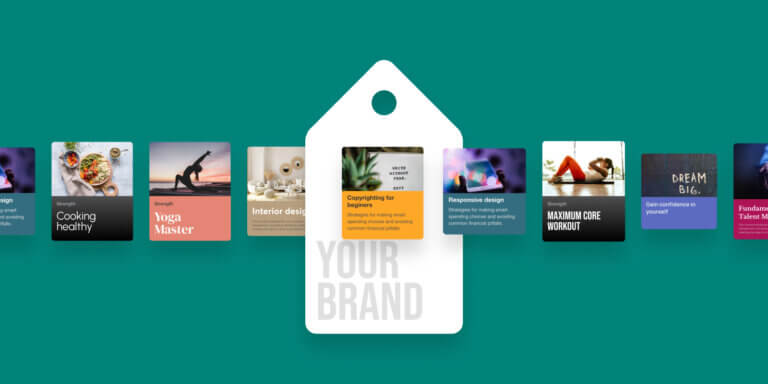
They also give you more control over the learner experience. Depending on the license, you can add your logo, colors, and messaging so the course feels consistent with the rest of your academy.
The biggest advantage is speed. Course creation can be time-intensive, with 36% of creators spending one to three months developing a single course. Ready-made content can help you get new topics to market faster and test demand before investing in creating your own course from scratch.
With the global elearning market projected to reach $279.3 billion by 2029, this can give you a faster way to enter or expand in a growing market.
How to resell online courses: step by step
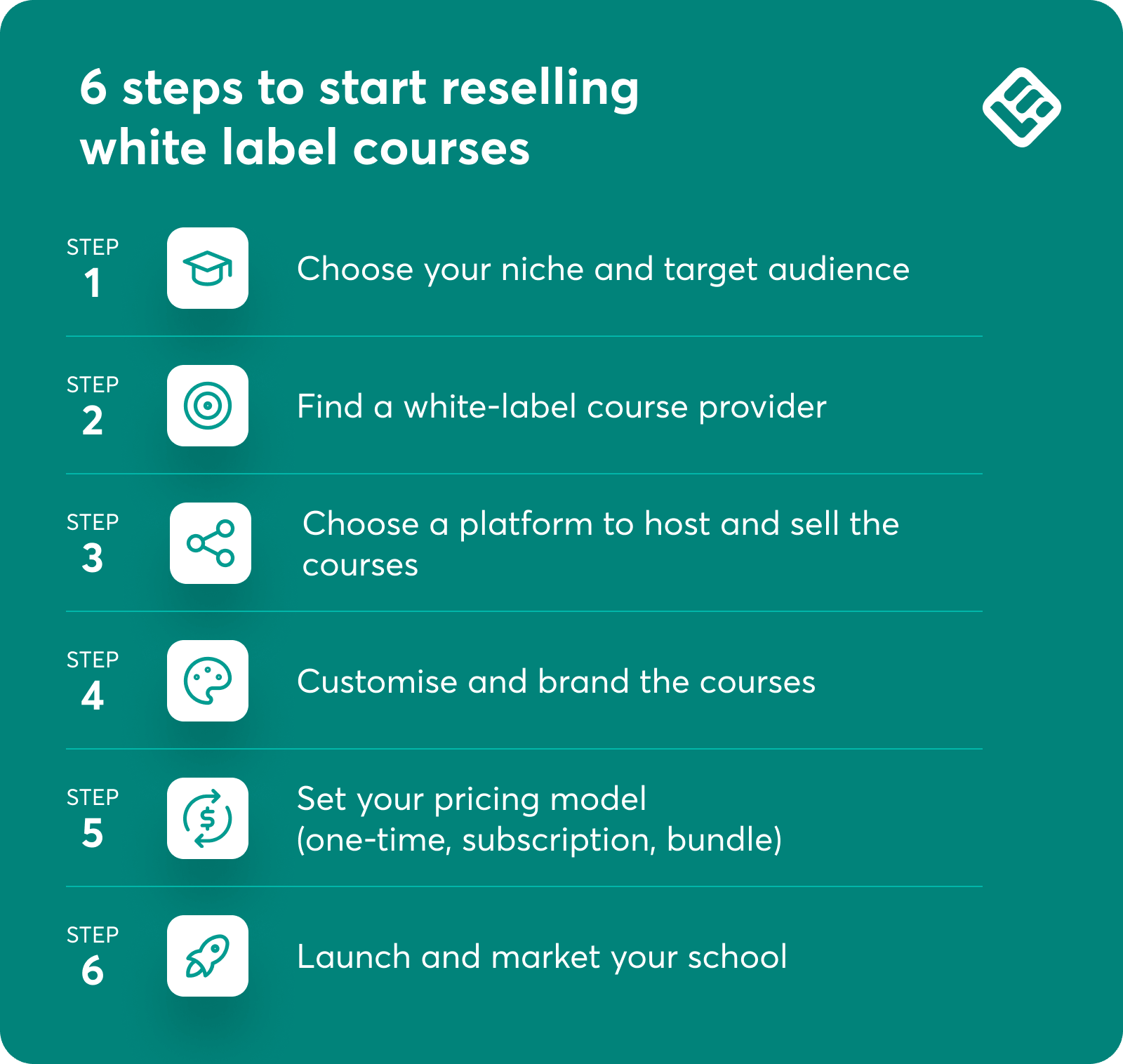
Here’s how to choose, customize, and start reselling white-label courses.
Step 1: Choose your niche and target audience
Start by identifying a clear niche and understanding who your ideal learners are. What problems are they trying to solve? What skills do they want to gain?
Defining your audience early helps you choose the right courses, craft relevant messaging, and stand out in a crowded market. It also allows you to build a focused brand rather than offering generic content.
Step 2: Find a white-label course provider
Once you’ve defined your niche, look for white-label course providers that align with your audience’s needs.
Choose courses that offer:
- High-quality, up-to-date content
- Diverse learning materials (videos, quizzes, resources)
- Strong customization options
- Ongoing updates and support
When licensing your courses, make sure the provider offers flexible terms, including resell rights and branding permissions. Review these carefully and follow them to avoid legal issues later on.
Step 3: Choose a platform to host and sell the courses
Next, select a platform where you’ll host, manage, and sell your courses.
Look for features like:
- Custom branding (logo, colors, domain)
- Built-in checkout and payment processing
- Marketing tools (email, funnels, landing pages)
- Analytics and reporting
Platforms like LearnWorlds make it easy to deliver a fully branded learning experience with customizable templates, branded certificates, and white-label capabilities.
See for yourself and try a 30-day free trial today.
Step 4: Customise and brand the courses
After selecting your courses, tailor them to your audience.
If it’s possible, start by editing the content:
- Lessons and modules
- Quizzes and assessments
- Media and supporting materials
Then focus on consistent branding. Add your logo, colors, and tone across:
- Course content
- Landing pages
- Emails
- Certificates
This transforms generic content into a more cohesive, branded experience and helps position you as a trusted training provider.
Step 5: Set your pricing model (one-time, subscription, bundle)
Next, decide how you’ll price and package your courses. Common models include:
- One-time purchase for individual courses
- Subscription access to a library of content
- Bundles that combine multiple courses at a discounted rate
Your pricing should reflect your audience, perceived value, and business goals. Test different options to find what converts best while maintaining healthy margins.
Step 6: Launch and market your academy
With everything in place, it’s time to launch and promote your courses. Start by defining your unique value proposition—why should someone choose your course over others?
Then use multiple channels to drive traffic:
- SEO and content marketing
- Email campaigns
- Social media
Boost conversions with:
- Limited-time discounts
- Bundle offers
- Certificates of completion
- A smooth, frictionless checkout experience
As Fernando Valencia at Unblinded Mastery puts it:
“Don’t expect a course to sell itself. You must sell the course. That may sound very simple and basic, but many course creators think they will create something, and then people will run at it. That does happen, just not most of the time.”
Fernando Valencia at Unblinded Mastery
With the above 6 steps and our handy checklist, you can start reselling courses without second-guessing your every move. While you go through these, don’t forget to collect customer feedback and update your courses regularly, incorporating that feedback.
How LearnWorlds Course Hub makes it easier to license and resell courses
Course Hub is a marketplace inside LearnWorlds where school owners can discover, license, and publish ready-to-sell courses from other creators directly into their own school.
Instead of finding providers separately, negotiating usage terms, transferring files, and rebuilding courses inside your LMS, you can browse available courses and add licensed content to your school.
This can be particularly useful when you need to expand your catalog quickly.
For example, a training company might win a corporate contract for a year-long program but lack some of the requested modules, such as well-being, emotional intelligence, or AI for leadership.
Creating every missing course from scratch may not fit the client’s timeline. Course Hub lets the training provider license relevant courses, import them into its school as drafts for review, and publish the ones that fit. With pay-per-enrollment licensing, the provider pays when learners enroll rather than purchasing the content upfront.
How Course Hub differs from sourcing courses manually
When you source content through third-party providers, marketplaces, or agencies, you may have to manage:
- Fragmented workflows across emails, contracts, shared drives, files, and multiple logins
- Manual importing, formatting, and rebuilding of the learner experience
- Courses that don’t feel consistent with the rest of your academy
- Upfront content costs and separate licensing or payment processes
Course Hub, on the other hand, centralizes the process within LearnWorlds, allowing licensing, publishing, and delivery to occur in one place, with a cleaner, more scalable model.
Key Course Hub capabilities
Course Hub’s main capabilities are the following:
- 1-click import
Bring licensed courses into your school without the usual file juggling and setup steps. - Branded delivery
Publish third-party courses, so learners experience them as part of your academy while staying consistent in terms of course structure and layout. - Pay-per-enrollment licensing
License and publish courses and only pay a clear, fixed fee for enrollment per learner.
💡Learn more about how to license courses via LearnWorlds Course Hub.
Top providers of white-label courses
Several providers and platforms are offering white-label, PLR, or ready-to-license courses.
Here’s a quick look at our top picks.
Provider | Content count | Free trial | Resale rights included | Best for | |
|---|---|---|---|---|---|
LearnWorlds (LMS + Course Hub) | Curated selection of 100+ courses across 8 categories (including AI, Business & entrepreneurship, Leadership, Communication, and more) | 30-day free trial | Yes (via Course Hub licensing terms / your own content sales) | Businesses and creators who want a fully white-labeled academy to host + sell training (and license courses via Course Hub) | |
LifterLMS | Limited (bundles focus on specific niches; varies) | No free trial (has a 14-day money-back guarantee) | Yes (on eligible course bundles / resell rights) | WordPress-first creators and teams wanting a highly customizable WP LMS | |
Cudoo | 800+ courses | No free trial (has a 14-day money-back guarantee) | Yes (white-label resale use) | Affordable language + professional development catalogs | |
Problemio | 250+ PLR courses | No free trial | Yes (PLR resale rights) | Entrepreneurs who want business/marketing/tech video courses fast | |
Skillshub | 1,000+ courses | Not stated (typically demo/quote-based) | Yes (white-label/customizable content) | Teams needing soft skills + compliance libraries and support | |
1,800+ assets (courses + articles/worksheets/etc.) | Not stated (membership-based) | Yes (PLR rebrand + resell, per license) | Coaches/therapists/wellness brands building resource libraries | ||
ITU Online | Varies (large IT certification catalog; exact count not stated in your draft) | Not stated (commonly sales-assisted) | Yes (via reseller program / white-label delivery) | MSPs, IT training providers, consultancies selling cert prep + cybersecurity | |
LMSPortals | Optional library (topic catalog listed; count varies by plan/library) | Not stated (often demo/quote-based) | Yes (via course library access + resale/ecommerce setup on plans that support it) | B2B training that needs multi-tenant portals + optional course library | |
LearnWorlds Course Hub & white label LMS
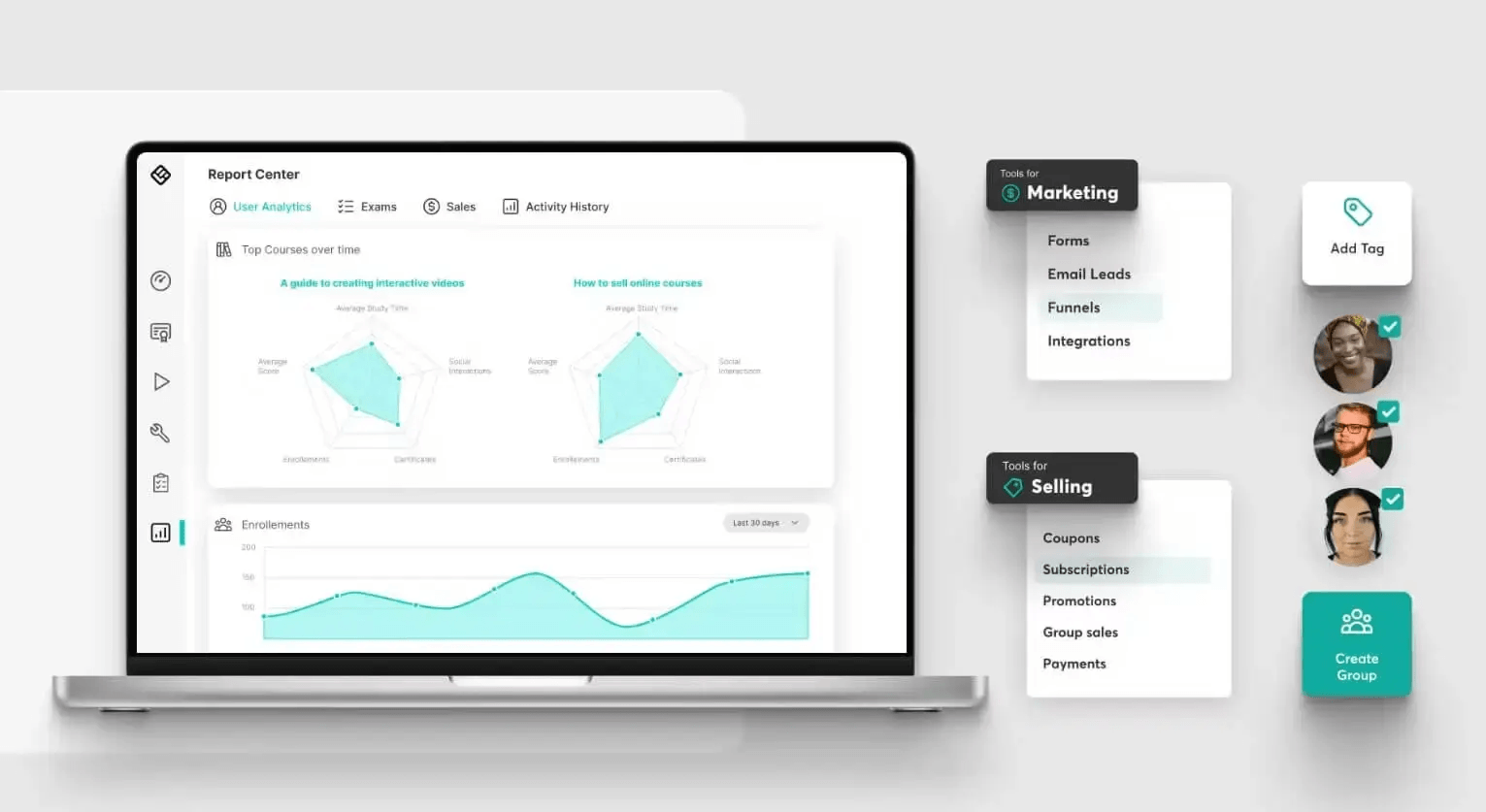
LearnWorlds is a white-label LMS platform that gives you the tools and templates you need to build a branded online academy and sell online courses. Through the LearnWorlds course builder, you can quickly create engaging elearning content, using white-label functionalities like custom domains, branded social logins, and branded email notifications.
The platform also offers 50+ fully customizable course templates to help you simplify course design, as well as strong customer assistance to support content resale.
Best for: Entrepreneurs, course creators, instructors, coaches, and businesses looking to build a complete online branded academy, monetize their expertise, or train their customers, partners, and employees.
Pros
- AI Assistant for course creation
- Interactive videos
- Assessment Builder
- No-code Website Builder
- Ability to create a white-label course app
- Exceptional customer support
- Support for SCORM and HTML5 files
- Multiple integrations (connects with Zapier)
- A variety of payment gateways
Cons
- No free plan
- Steep learning curve
Pricing
LearnWorlds provides a 30-day free trial and the following paid plans:
- Starter: $29/month
- Pro Trainer: $99/month
- Learning Center: $299/month
- Corporate: contact the sales team for a quote
*Pricing information retrieved from LearnWorlds in August 2026
LifterLMS – Instant courses
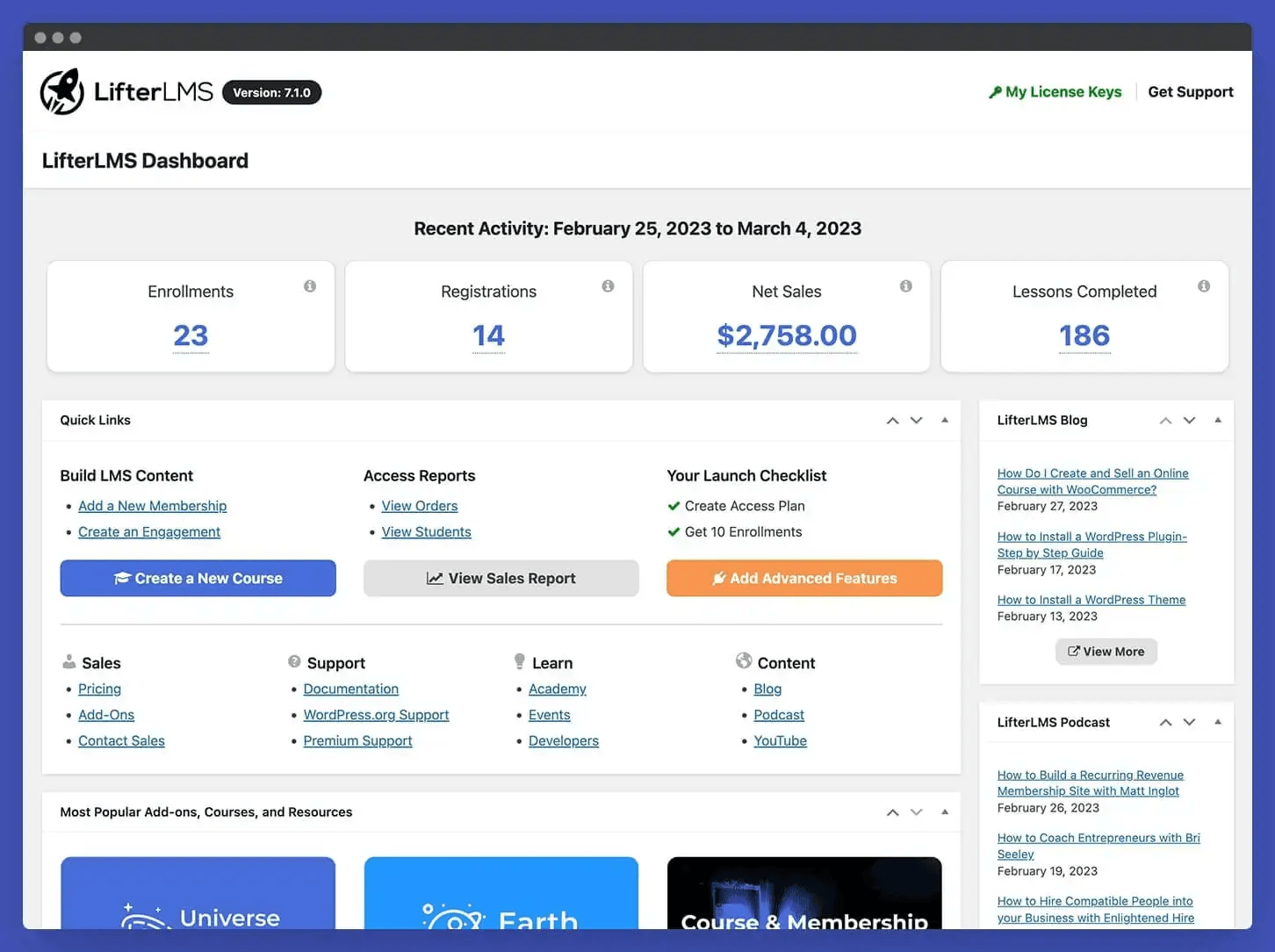
LifterLMS offers features like course builders, free white-label course bundles, and email marketing tools to help you create, launch, and scale online courses. As an LMS with free resell rights, the platform also allows you to sell its courses and keep the profits to yourself.
Currently, the LifterLMS white-label courses focus on health, wellness, and relationships. And with the platform’s useful customization and integration with WordPress, you can easily import these courses into your website to begin selling them.
Best for: Course creators, coaches, businesses, and schools who want a customizable WordPress-based LMS.
Pros
- Drag-and-drop course builder
- Free core plug-in
- Content dripping
- Membership options
Cons
- Expensive add-ons
- SCORM-compliant
- Outdated front-end design
Pricing
LifterLMS offers a 30-day money-back guarantee and the following subscriptions:
- Infinity Bundle: $799/year
- Universe Bundle: $299/year
- Earth Bundle: $199/year
- Core Plug-in: $0
*Pricing information retrieved from LifterLMS in August 2026
Cudoo – White label LMS
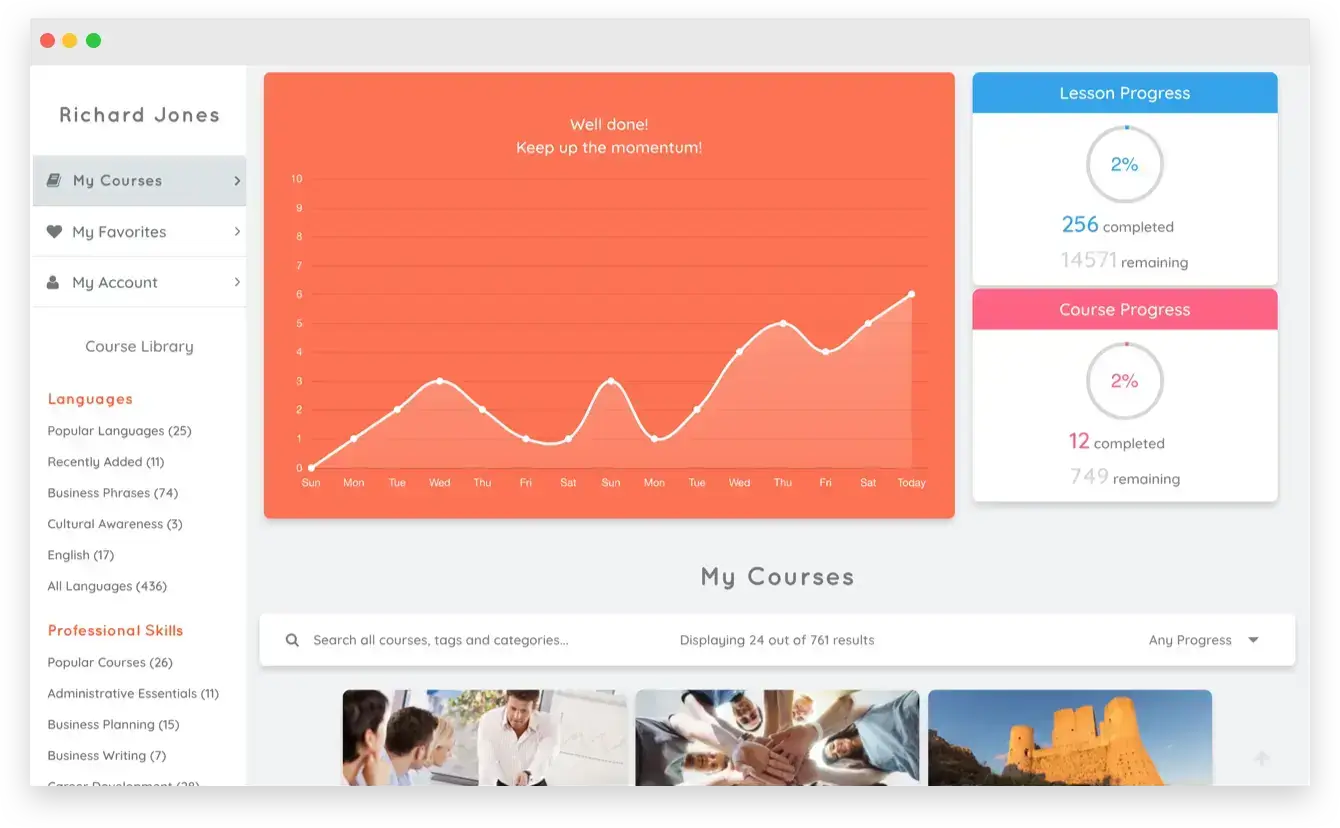
Cudoo offers over 800 courses in language and professional development, along with bundled programs that include lifetime access at discounted rates. The Cudoo white-label LMS lets you choose from over 800 online courses in language and professional development. Cudoo even offers professional development course bundles, each one providing lifetime access and delivered at a discount.
Extensive customization options like custom domains, login pages, and dashboards also let you resell Cudoo online courses as your own branded assets.
Best for: Organizations, training providers, online instructors, and businesses seeking an affordable LMS focused on language and professional development courses.
Pros
- Self-paced and multi-format learning
- Provides certifications upon course completion
- Affordable pricing
- Lifetime access
Cons
- No free trial
- Limited advanced courses
Pricing
Cudoo offers a free plan and two paid packages:
- Pro: $399/year
- Elite: $599/year
*Pricing information retrieved from Cudoo in August 2026
Problemio – PLR courses
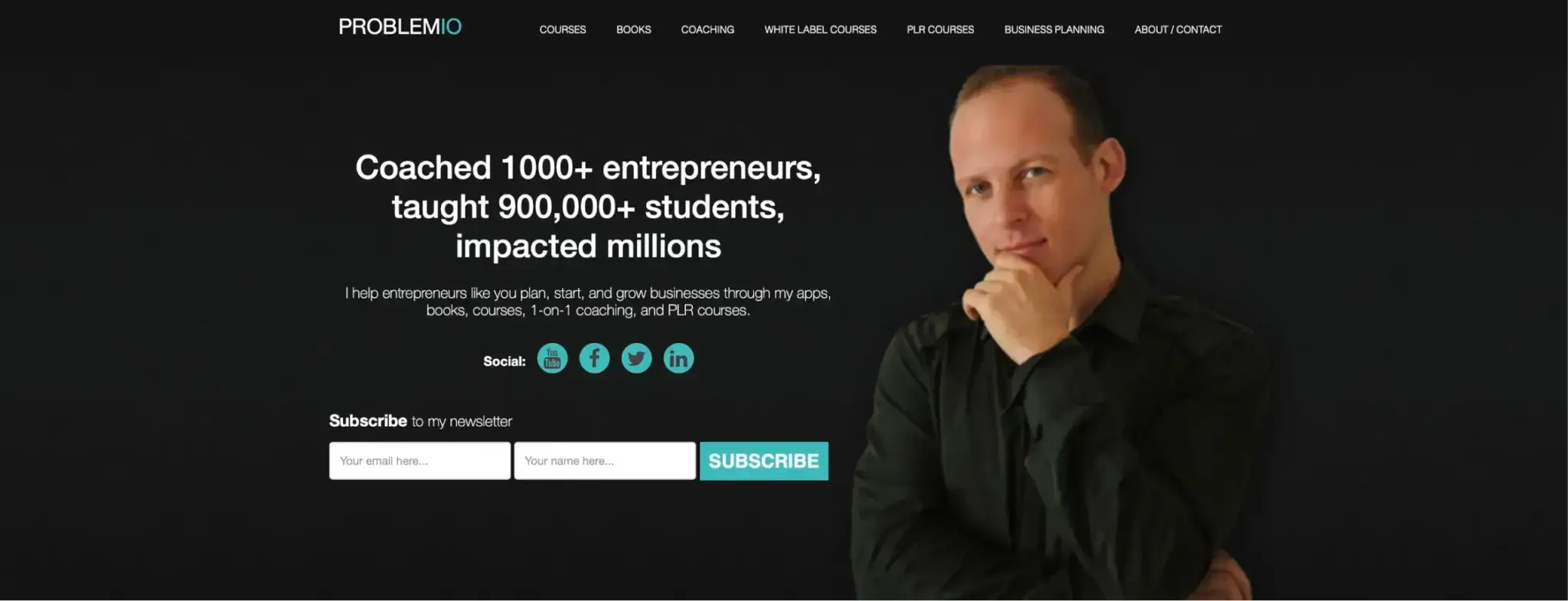
Problemio offers over 250 private-label courses from popular Udemy instructor Alex Genadinik, covering business, marketing, technology, and programming. It also gives you lifetime access to PLR courses, lifetime updates, and business course resell rights.
Best for: Entrepreneurs, coaches, digital marketers, organizations, and educators who want to quickly launch or expand their business, marketing, and technology course offerings.
Pros
- Lifetime license updates
- Can keep 100% of your lifetime revenue
- Ongoing support for you and your students
- Created by an industry-recognized professional
Cons
- Expensive
- Can’t resell on Udemy
- Limited course format
- Must use Dropbox to access courses
Pricing
Problemio offers the following packages:
- 1 course: $500 for a lifetime license and updates
- 5+ courses: $400 per course for a lifetime license and updates
- 100-course bundle: $25,000 for a lifetime license and updates
*Pricing information retrieved from Problemio in August 2026
Skillshub – Soft skills & compliance
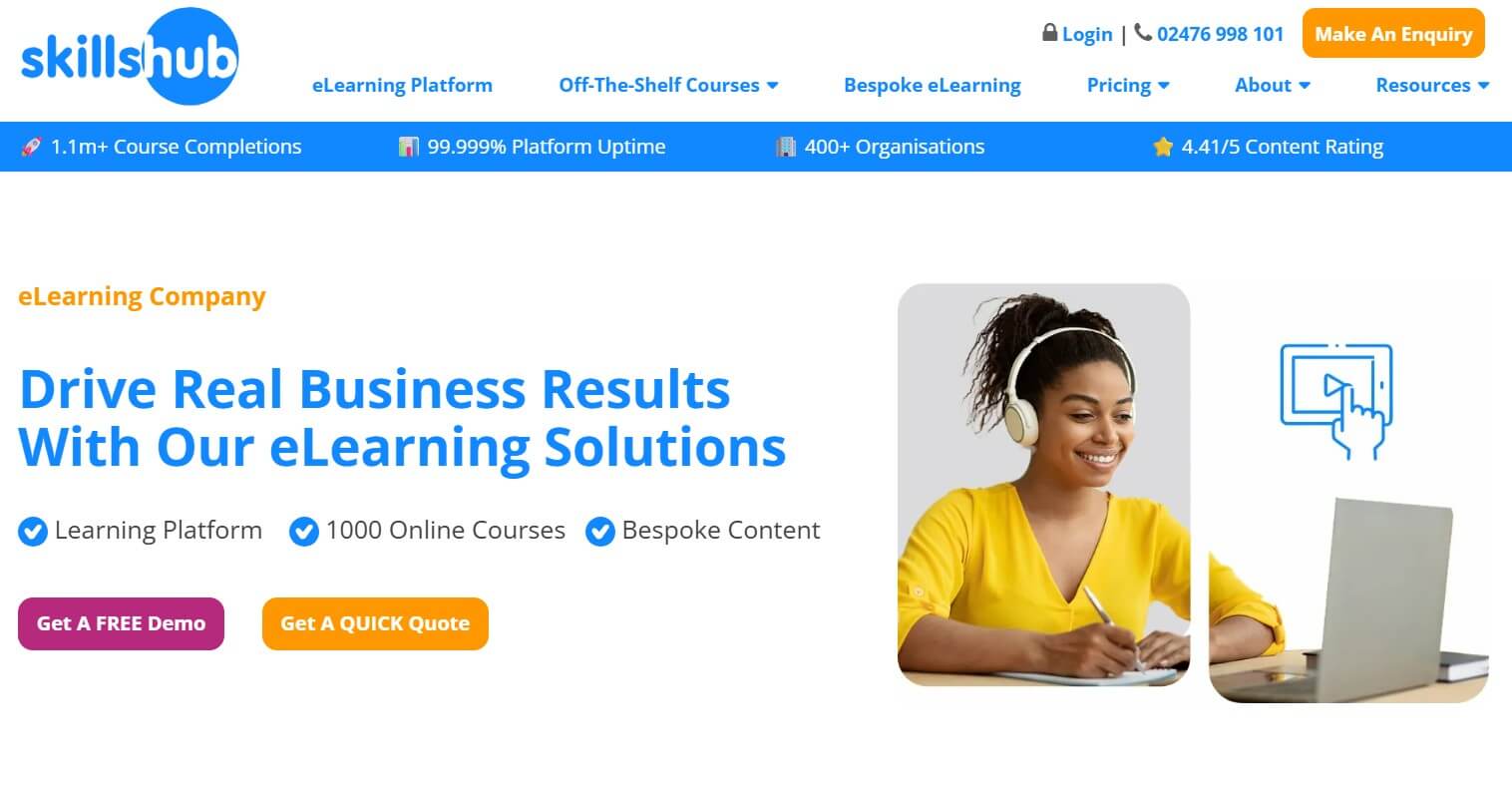
Skillshub is a UK-based learning platform offering both off-the-shelf and bespoke solutions.
Skillshub offers 1,000+ courses and supporting resources focused on compliance and workplace skills. The platform’s engaging soft skills courses feature motion graphics, animations, and presenter-led demos.
You can fully customize Skillshub’s platform and content so it reflects your organization’s identity.
Best for: Businesses seeking an easy-to-use LMS with skills training courses.
Pros
- Easy-to-use interface
- Supports SCORM files
- Custom LMS
- Ongoing training and support
- Bespoke content
Cons
- Limited course topics
- Must request a quote for full pricing
Pricing
Contact the Skillshub sales team to receive a custom quote for the following offers:
- Learning platform with content
- Content for your LMS
*Pricing information retrieved from Skillshub in August 2026
**If you’re looking for white label courses to resell in the UK, check whether the provider’s licensing, pricing, and course content suit your market.
PLR.me – Health & wellness courses
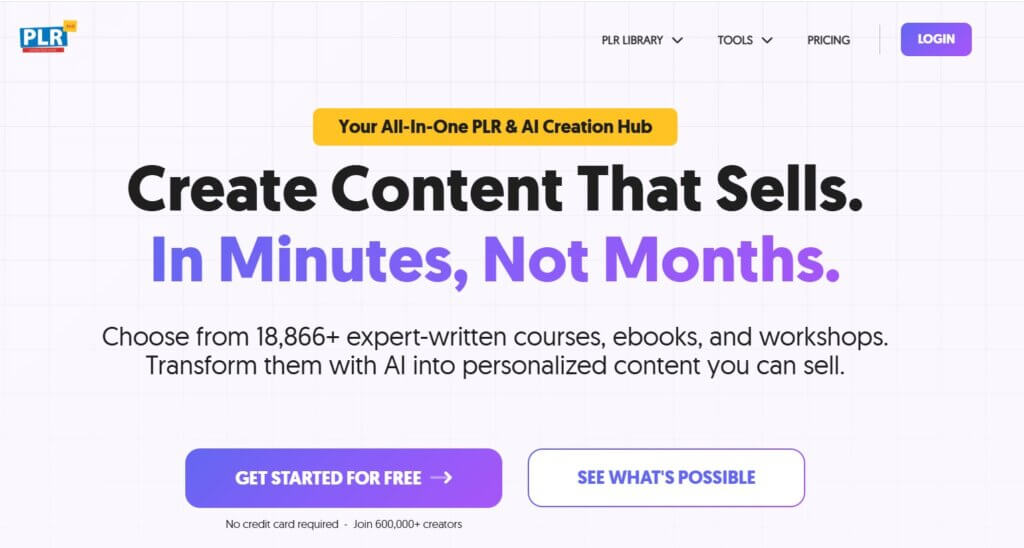
PLR.me offers PLR courses to resell in wellness and therapy fields as well as in the coaching and personal growth niches. Because of its downloadable articles, presentations, and worksheets, PLR.me makes it easy to build a branded product library.
On the platform, you’ll find various PLR.me health coaching courses and white-label mental wellness content designed to support students on their personal journeys.
PLR.me’s flexible licensing also lets you republish, rebrand, and resell content—no attribution required—helping you grow your wellness business with no hassle.
Best for: Coaches, therapists, content creators, and wellness pros who want to grow their business with a broad range of health and wellness resources.
Pros
- AI marketing assistant
- Content marketing tools
- Flexible and affordable pricing
- Wide range of content
- Strong customer support
Cons
- Limited access to specific products
Pricing
PLR.me offers the following credit-based pricing options:
- Free: 10 credits
- Starter: 30 credits/month – $47/month
- Essentials: 100 credits/month – $87/month
- Pro: 500 credit/month – $187/month
*Pricing information retrieved from PLR.me in August 2026
ITU Online – White-label IT training courses
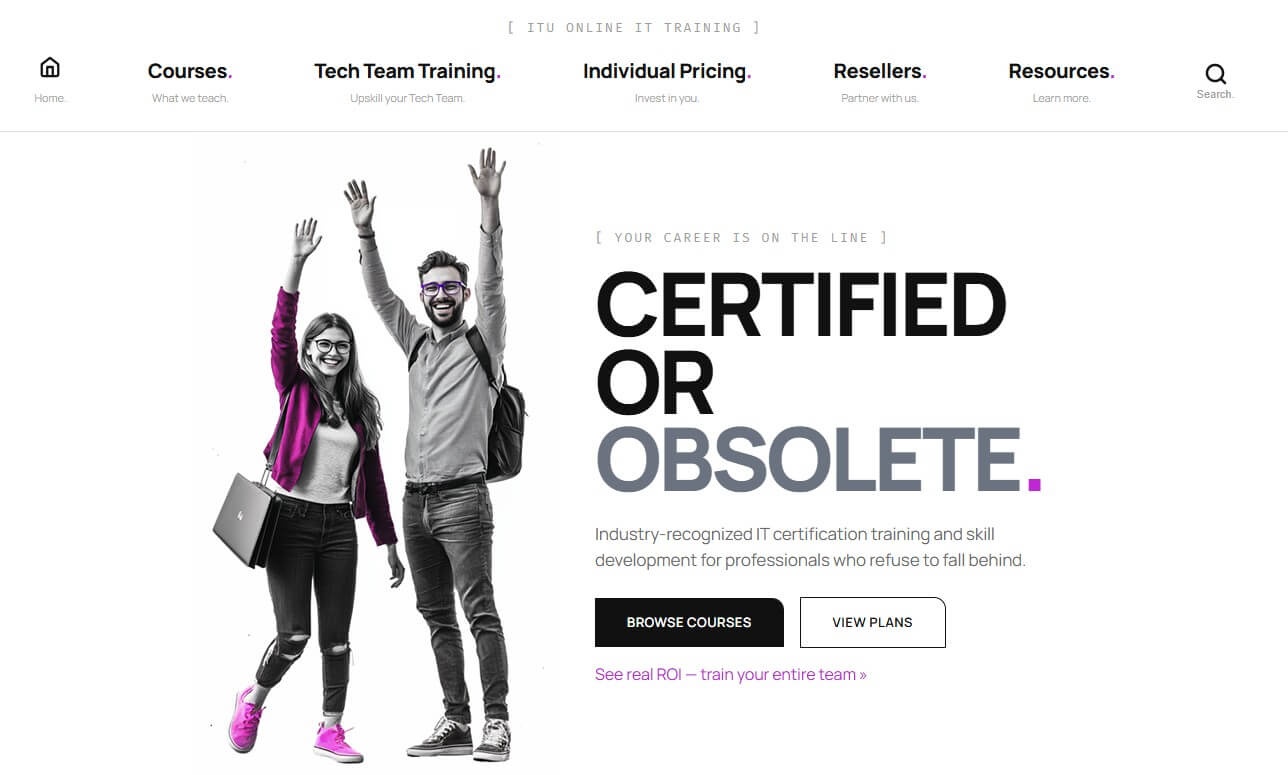
ITU Online offers a reseller program that lets you white-label hundreds of IT training courses and deliver them through a branded LMS (logo and custom domain), offering an experience where your learners never get to see the ITU brand. Their catalog includes popular tracks like CompTIA, Cisco, AWS, Microsoft, cybersecurity, and networking.
Best for: IT training companies, MSPs, consultancies, and organizations that want to sell or bundle IT certification prep under their own brand.
Pros
- White-label LMS (logo + custom domain)
- Ready-made IT course catalog (CompTIA/Cisco/AWS/Microsoft + cybersecurity)
- You set the price (buy wholesale, sell at your margin)
- No minimums / no long-term contracts (per the reseller page)
- Tiered reseller LMS options (Smart Path / Standard / Pro) with feature matrix
Cons
- No public reseller pricing listed (requires contacting their partnership team)
- Content is focused on IT training (not broader soft-skills libraries)
Pricing
ITU Online doesn’t publish reseller pricing on the page. You need to contact their partnership team for a custom plan.
*Pricing information retrieved from ITU Online in August 2026
LMS Portals – Multi-tenant & white label LMS with course library
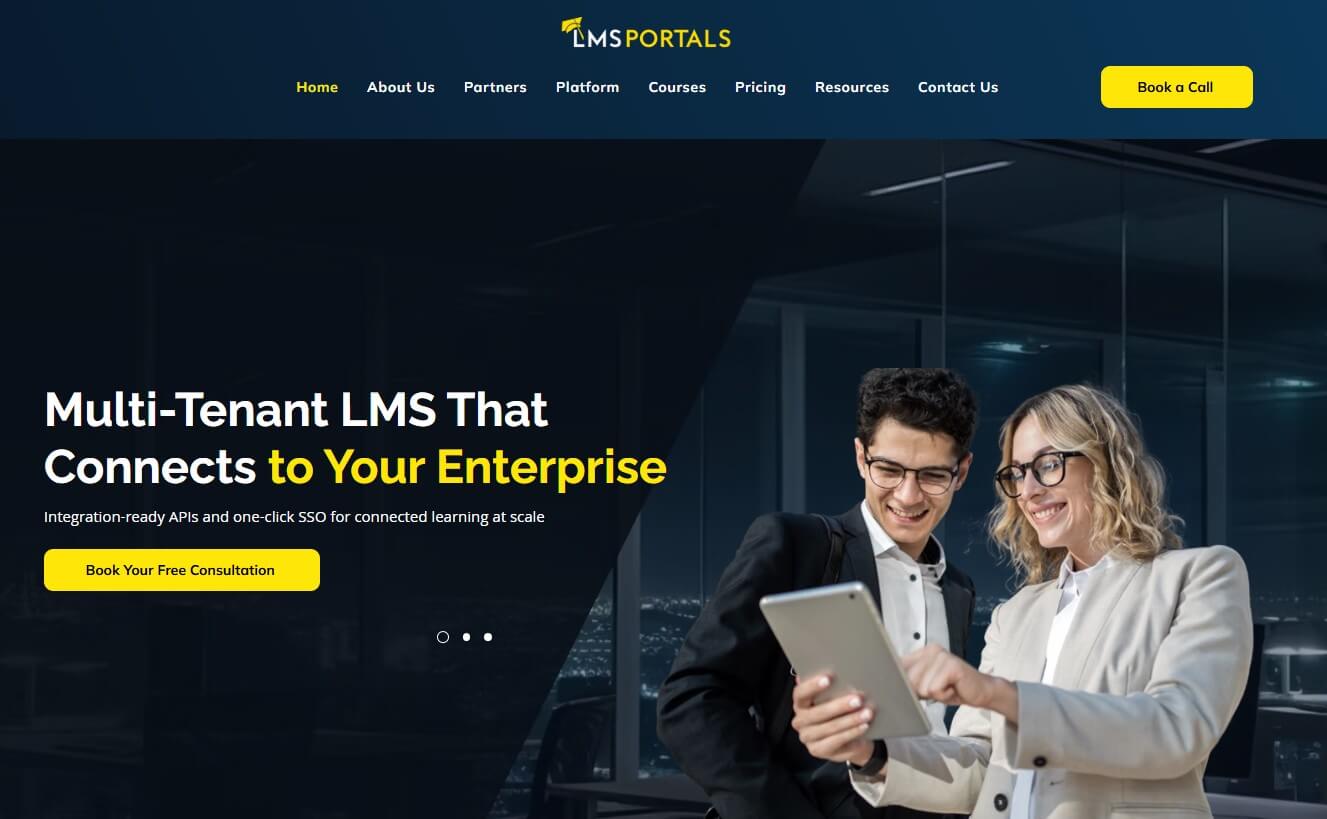
LMS Portals is a multi-tenant LMS built to launch multiple branded training portals (internal and/or external) and supports selling training with ecommerce on higher tiers. They also offer an optional course library with 850+ topics listed, and their courses can be fully customized.
Best for: B2B training providers, customer education teams, and businesses that need separate portals per audience/client (multi-tenant).
Pros
- Multi-portal capability (Growth: up to 3 portals; Enterprise: 4+ / optional unlimited)
- Ecommerce enabled on Growth and above
- SCORM/xAPI support and built-in authoring tools (quizzes/assignments/surveys)
- Enterprise includes “unlimited enrollments” in the LMS Portals course library
- 850+ course topics listed across categories like compliance, banking, construction, customer support, etc.
Cons
- Course library is a separate fee (and details may require a call)
- Most robust course-library access is positioned at the Enterprise pricing tier
Pricing
LMS Portals doesn’t mention pricing details on its site, but offers three pricing plans – Starter, Growth, and Enterprise. For customer education, pricing starts at 3$ per user/per month. Contact the company to learn more.
*Pricing information retrieved from LMS Portals in August 2026
How to choose the right white-label courses to resell
Choosing the right white-label courses is much easier when you follow a repeatable process.
Use the steps below to shortlist content you can confidently resell, without risking “faceless” training, outdated modules, or licensing surprises.
1. Assess your audience’s needs
Before comparing providers or catalogs, get clear on who you’re building for and what they’re paying to achieve.
Ask:
- What outcome are they paying for?
This could be certification, compliance completion, role readiness, promotion, or performance improvement - What’s their starting point?
Consider their current skill level, existing knowledge, and how much time they have to learn - What makes them trust a course enough to enroll?
This might include recognized credentials, templates, coaching support, assessments, or proof of outcomes
If possible, validate these assumptions with a survey covering your audience’s goals, challenges, skill level, and content preferences.
Then use those findings to determine what your white-label course needs to include. A marketing audience, for example, may expect practical templates, swipe files, and checklists alongside video lessons.
2. Evaluate course quality, relevance, and freshness
Research on what drives people to buy online courses suggests that course quality and relevance both play an important role.
Score potential courses from 1–5 across:
- Relevance: Does the course address the outcome your audience wants?
- Production quality: Is the audio and video clear, and does the course have a logical instructional flow?
- Proof signals: Can you find reviews, recognizable creators, completion data, or sample lessons?
- Assessment and completion: Does it include quizzes, assignments, certificates, or measurable objectives?
- Format compatibility: Does it support SCORM or HTML5 if you need portability or compliance tracking?
- Freshness: When was the course last updated, and does the provider have an update policy?
Freshness matters most in subjects that change quickly, including AI, marketing, cybersecurity, and compliance. Look for a visible last-updated date, documented update policy, and version history or release notes where available.
If you’re selling into HR, L&D, compliance, or other training-heavy environments, trackable assessments and reporting may matter more than having a large library of video content.
Pro tip
If your niche evolves quickly, aim for courses updated at least quarterly. If you can’t confirm update frequency on the provider’s product pages, blog, or release notes, treat it as a risk.
3. Understand licensing terms
Understanding and following licensing terms will help you stay safe, as long as you don’t violate any copyright or intellectual property law. Licensing is where most expensive mistakes happen, so before committing, confirm the following items in writing.
Resale rights & restrictions
- Where can you sell the course?
- Can you include it in bundles, memberships, or B2B packages?
- Are there restrictions on pricing, discounting, or packaging?
Branding & attribution
- Can you remove the provider’s branding?
- Can you add your own?
- Do you need to credit the original creator?
- Can you edit the content or only its branding?
Updates & support
- Are ongoing course updates included?
- What support is available for technical, learner, or content issues?
IP & compliance clarity
- Who owns the underlying intellectual property?
- What exactly does your license permit?
- What happens to your rights if the agreement ends?
Payment terms
- What fees apply?
- Is there revenue sharing?
- Who handles refunds or chargebacks?
Keep a copy of the agreement, and re-check it any time you change packaging (eg reselling via cohorts, adding bonuses, bundling certifications).
4. Select a pricing model that fits your business
White-label course licensing usually comes in three models. Pick the one that matches your margins and sales motion.
One-time license (lifetime or fixed term)
Best when you want predictable costs and full margin control, especially if you have strong distribution.
- Good for: course bundles, evergreen catalogs, high-volume sales.
- Watch-outs: updates may cost extra; content can go stale if the provider doesn’t refresh.
Revenue share
You pay as you sell. It has a lower upfront risk, and it’s easier to test new topics quickly.
- Good for: new course lines, market testing, variable demand.
- Watch-outs: margin ceilings, payout admin, and dependence on the provider’s terms.
Subscription access (library licensing)
You pay a recurring fee for access to a catalog. This is great for breadth and continuous additions.
- Good for: internal training libraries, compliance bundles, “Netflix-style” learning memberships.
- Watch-outs: costs scale over time; confirm what happens if you cancel (do courses disappear?).
Common mistakes to avoid when reselling white-label courses
Even with the right license in hand, it doesn’t guarantee the course actually sells. Here are the mistakes that typically stand between a signed agreement and real revenue.
Reselling the course exactly as you received it
Dropping in generic content without adapting tone, examples, or packaging to your audience is the fastest way to blend in with every other reseller using the same source material.
As Tamsin Gable, Ambassador at Comfax, put it: “We tried working with white-label content, but it often came out ‘faceless’… we need to stand out, not merge with a mass of identical sites without a ‘zest.'”
The fix? Budget real time for adaptation, not just a logo swap.
Handing the provider a vague brief
If you don’t specify your audience, tone of voice, and desired outcomes upfront, you’ll get content that matches the topic but misses the delivery.
Wendy Makinson, HR Manager at Joloda Hydraroll, notes: “You have to give the provider very specific guidelines, otherwise they’re simply not going to produce what you’re assuming they will.”
Interestingly, Shantanu Pandey, Founder & CEO at Tenet, saw first-draft accuracy jump from 40% to 85% for a fintech client after investing just 15 minutes in a detailed brief. His tip is to standardize future briefs with a one-page template.
Competing on the exact same course as everyone else
This is especially common with MRR content, where multiple resellers can buy rights to the identical package. Without a distinct angle — niche, bundled bonuses, coaching, or tighter positioning — you’re racing other sellers to the bottom on price rather than building a business.
Letting the license go stale
Content that was current when you licensed it can age fast in AI, marketing, compliance, or cybersecurity topics. Use your provider’s update policy rather than assuming it updates itself.
Ready to launch your white-label elearning business?
White-label courses are the fastest path to building your own catalog, and the real opportunity is speed without sacrificing credibility. If you can launch with polished, job-relevant courses (and deliver them under a consistent brand), you can start selling sooner, learn what your audience actually buys, and then reinvest in original content.
If you want to do that inside one platform, LearnWorlds helps you brand the entire experience end-to-end (domain, login, emails, course delivery), create and improve content faster with AI-powered tools, and get support when you’re scaling.
Try LearnWorlds for 30 days and see how easy reselling courses can be.
FAQs
White-label courses are pre-built training products you can legally rebrand as your own and sell to your audience under your business name, based on the provider’s license terms. Typically, a white-label course package includes:
- Course content (videos, lessons, quizzes, downloads, certificates, etc.)
- Branding rights (swap logos/colors, remove creator branding, sometimes edit content)
- Commercial rights to sell the course to learners or organizations
- Updates, support, or a revenue-share structure (optional)
This matters because many buyers want ready-made courses to resell instead of building the content from scratch.
These terms sound similar, but they’re not the same, and the license model is the real difference.
- White-label courses: you rebrand and sell the course as your own (often with stronger branding control and sometimes a more “productized” experience).
- PLR (Private Label Rights): you can usually edit, rename, and republish the content (often broader editing rights than white-label), but PLR quality and uniqueness can vary widely depending on the provider.
- MRR (Master Resell Rights): you can sell the course and also sell the rights for others to resell it. This is why master resell rights courses often show up in “business-in-a-box” offers. However, it can create an “everyone selling the same thing” problem unless you differentiate with tighter positioning, bonuses, coaching, or a unique delivery format.
Quick rule to remember: if you want a brand-first catalog → white-label. If you want heavy editing control → PLR. And, if you want to sell a business-in-a-box license → MRR.
Yes, you can sell white-label courses without creating course content from scratch, as long as your license grants resale rights. But in practice, you’ll still want to create some value around the course so it doesn’t feel generic:
- A branded sales page and positioning for a specific niche
- A simple onboarding email sequence
- Optional bonuses (templates, checklists, office hours, community)
This is exactly the “don’t make it faceless” lesson many teams learn the hard way: the course can be outsourced, but the brand voice, outcomes and packaging are what make it sell.
You’ll need a platform that can do the following four things well:
- Branded delivery (custom domain, white-label experience)
- Ecommerce (checkout, coupons, bundles/subscriptions if needed)
- User management (enrollment, groups, access control)
- Tracking (progress, completion, reporting—especially for B2B/compliance)
That’s why most sellers use a full LMS rather than “just a video host.”
If you’re planning to grow a resell catalog quickly, a platform that also helps you source/license content is a major advantage—because “no built-in course marketplace” is a known pain point in this space.
Explore LearnWorlds’ Course Hub.
Some providers may offer free course samples, free content, or trial access, but that doesn’t automatically give you the right to resell the content. If you’re looking for free white-label courses to resell, check the license carefully to confirm that commercial resale and rebranding are explicitly permitted.
They’re legal to resell when you have a license/contract that explicitly grants you resale rights, and you follow the terms.
Before you sell, confirm:
- You have commercial resale rights (not “personal use only”)
- Whether you can remove the original branding and use your own
- Whether you can edit the content or only rebrand it
- What happens with updates (included vs extra)
- Any restrictions (where you can sell, pricing rules, client limits)
It depends on your audience, pricing, and license model, but here are realistic ranges:
- Wholesale/one-time license: often 20%–60% gross margin after content costs (higher if you have strong distribution and bundle/upsell).
- Revenue share: margins often land around 30%–70% of each sale, depending on the split and your marketing costs.
- Subscription library access: margins depend on churn and pricing, but can work well if you sell to teams (B2B) and keep acquisition costs controlled.
Here’s an example: if you sell a $199 course and your licensing cost is $79 per sale (or equivalent rev share), your gross margin is $120. If you sell 50/month, then $6,000 is your gross margin/month before ads, tools, refunds, and time.
The biggest profit lever isn’t the course but its packaging. That translates to niche positioning, bundles, and B2B deals and recurring subscriptions often drive better economics than one-off sales.
There isn’t one universal “best-selling” course category. The top sellers vary by audience and channel. What sells is training that’s tied to a clear job outcome and a high urgency trigger.
High-demand categories that tend to perform well are:
- Compliance and safety (mandatory, recurring, low marketing resistance)
- Career and certification prep (clear credential outcome; strong intent)
- Role-based upskilling (sales enablement, customer support, leadership basics)
- Revenue-adjacent skills (digital marketing, analytics, AI productivity—when linked to a specific role)

Zeniya Cooley
Zeniya Cooley is an SEO blog writer and journalist. She has written for EdTech companies, SaaS companies, higher education institutions, and publishers like Lexia Learning, eLearning Industry, Central Carolina Technical College, Simon & Schuster, and more. Visit her website at www.zeniyacooley.com and connect with her via LinkedIn.

Kyriaki is the Organic Content Strategist at LearnWorlds, where she writes and edits content about marketing and e-learning, helping course creators build, market, and sell successful online courses. With a degree in Career Guidance and a solid background in education management and career development, she combines strategic insight with a passion for lifelong learning. Outside of work, she enjoys expressing her creativity through music.
 Back to blog
 Scroll to top
FAQ
Everything you have ever wondered, but were too afraid to ask...

Related Articles