

Key takeaways
- One partner program usually has to adapt in three ways at once: by partner type, by industry vocabulary, and by region and language, without turning into three separate programs to maintain.
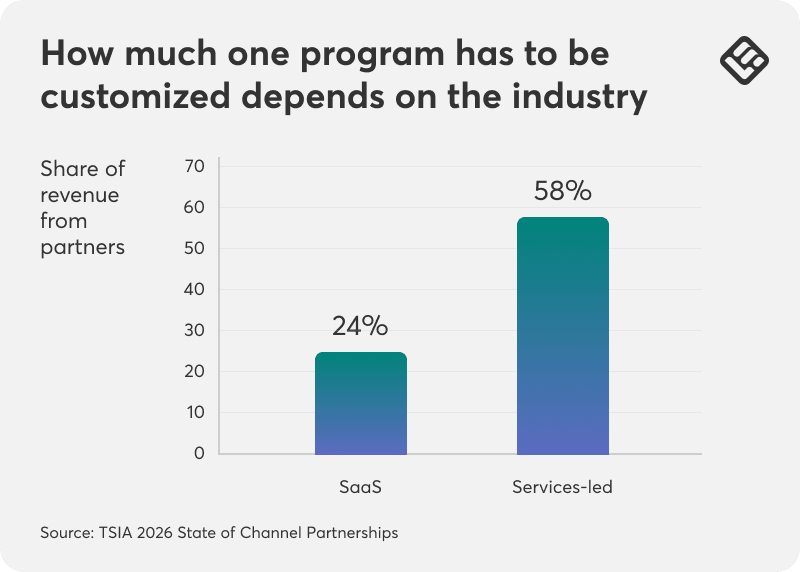
- How much a program needs to vary depends on the business. Partner-sourced revenue ranges from 24% in SaaS to 58% in services-led industries, according to Digital Applied’s 2026 channel marketing research.
- Vendors using AI for partner training and localization report double-digit gains in partner-sold revenue, according to TSIA, largely because the core program stays intact instead of getting rebuilt for every variant.
According to TSIA’s 2026 State of Channel Partnerships research, vendors using AI for training, localization, and customer success support report double-digit increases in partner-sold revenue compared to companies without those capabilities.
Those gains trace back to one specific requirement. The program stops getting rebuilt every time it needs to reach a new partner type, industry, or region.
This requirement is the solution to the same four complaints that come up whenever a partner program needs to move from one team to many:
- Partners sell the same product in different ways
- Every region needs its own localized materials
- Partner messaging ends up inconsistent across the board
- The roadmap keeps moving faster than enablement can track it
The underlying job behind all four is to create one approved program and keep it stable. Everything around it (the examples, language, visuals, resources, and supporting pages) adapts to the partner in front of it.
It’s what a connected AI workflow inside LearnWorlds is built for.
If you want to explore any video content in depth or tailor AI to a unique workflow, talk to our experts.
The parts of the program that stay the same
Everything downstream depends on settling this answer first.
A shared core has to exist as a single reference before any partner-specific or region-specific version can branch off it, covering:
- The branding
- The messaging
- The vocabulary
- The instructional structure
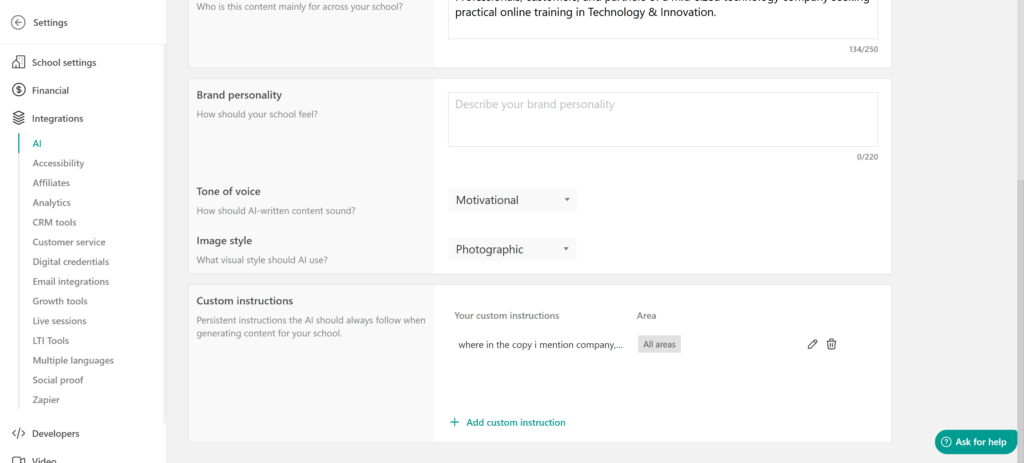
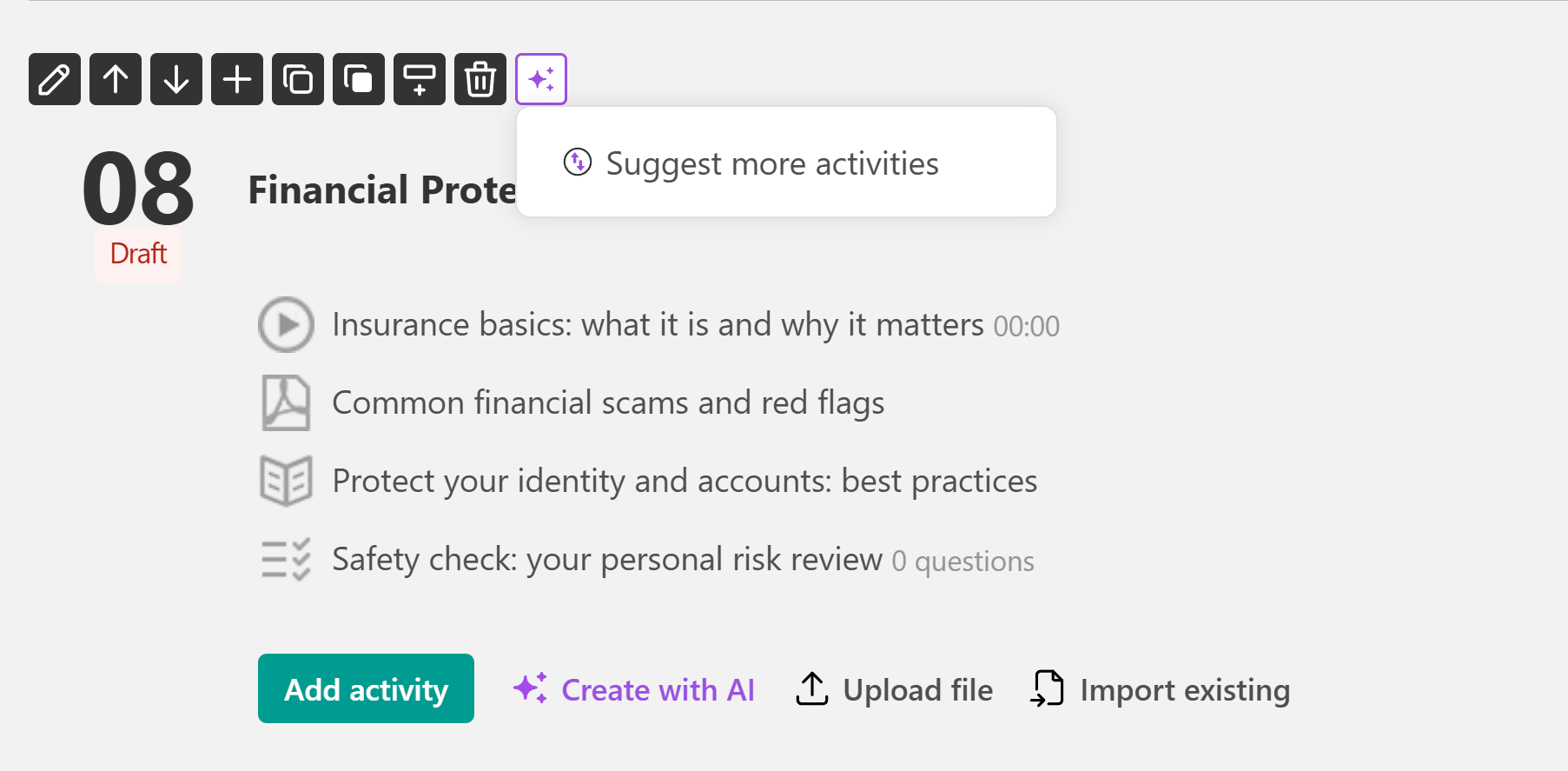
You start by setting up your Academy Guidelines in LearnWorlds, which only need to be set and referenced once. Then you set the tone, terminology, and instructional direction that every generated asset needs to check against.
Next, you add your Existing Content.
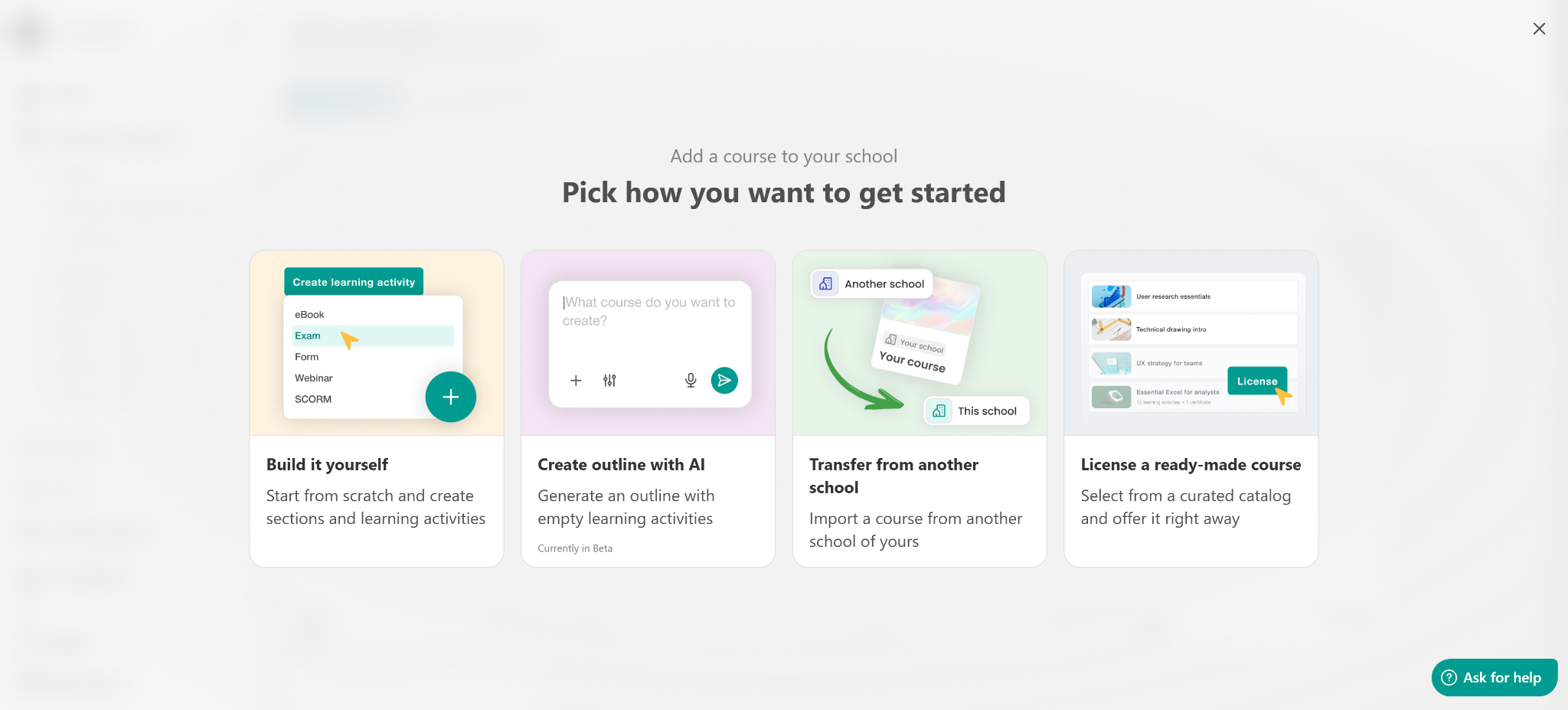
It brings in whatever the program already runs on, such as product documentation, previous training decks, and internal wikis, so the core product gets built from what’s already approved.
This saves you valuable time by not having to write it from scratch.
Skipping this step is what usually causes inconsistent partner messaging in the first place.
If you don’t have one defined reference and an answer to how approved vocabulary gets maintained, each contributor who builds a partner-facing asset ends up making their own judgment calls about tone and terminology. Those judgment calls easily drift apart over time.
Partner type changes what a partner sees
The real question underneath all of this is which parts actually change by industry, partner type, or country.
A reseller, a referral partner, and a technology integration partner are selling the same program from three different vantage points:
- A reseller needs pricing and objection handling
- A referral partner needs a short pitch and qualification criteria
- A technology partner needs integration details that none of the others require
Context Creation helps you generate each partner type’s version from the same approved core. It allows you to surface the sections relevant to that partner type rather than handing everyone an identical packet and expecting them to find their own relevant three pages.
💡Read through the guide to creating an online course with AI.
Industry changes the vocabulary
A healthcare partner and a manufacturing partner selling the same platform need different case studies, different compliance framing, and different visuals, even when the underlying pitch hasn’t changed at all.
AI Images generates sector-relevant visuals from the same core content, and the same generation step adapts terminology and examples to fit the industry a given partner sells into.
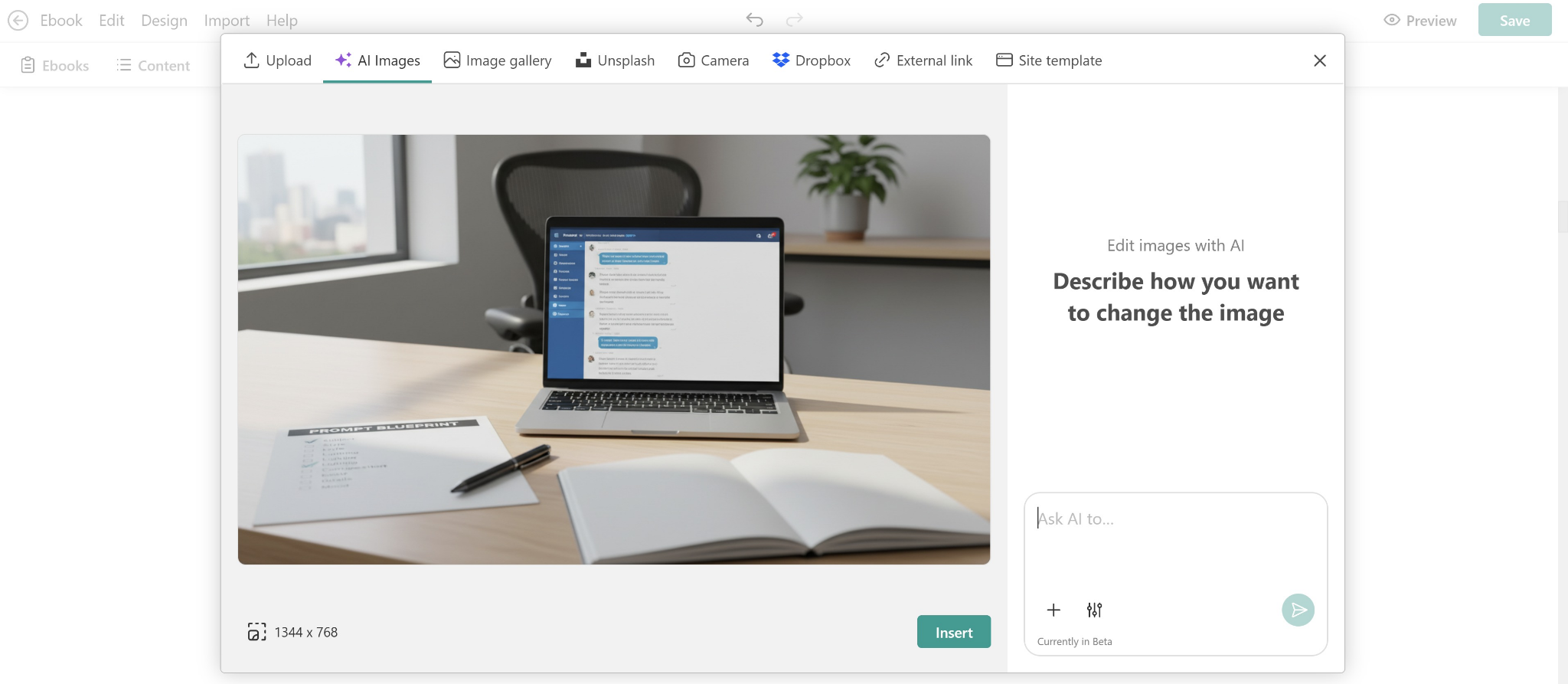
The pricing page and the certification requirements stay identical. Only the language around them changes.
Region changes the language, not the substance
Translating a partner program by hand usually means re-briefing a translator every time the source material changes, and hoping the regional version gets updated before a partner in that market notices it’s outdated.
Translation works from the same approved core, so a regional version updates from the same source instead of drifting into its own maintained copy.
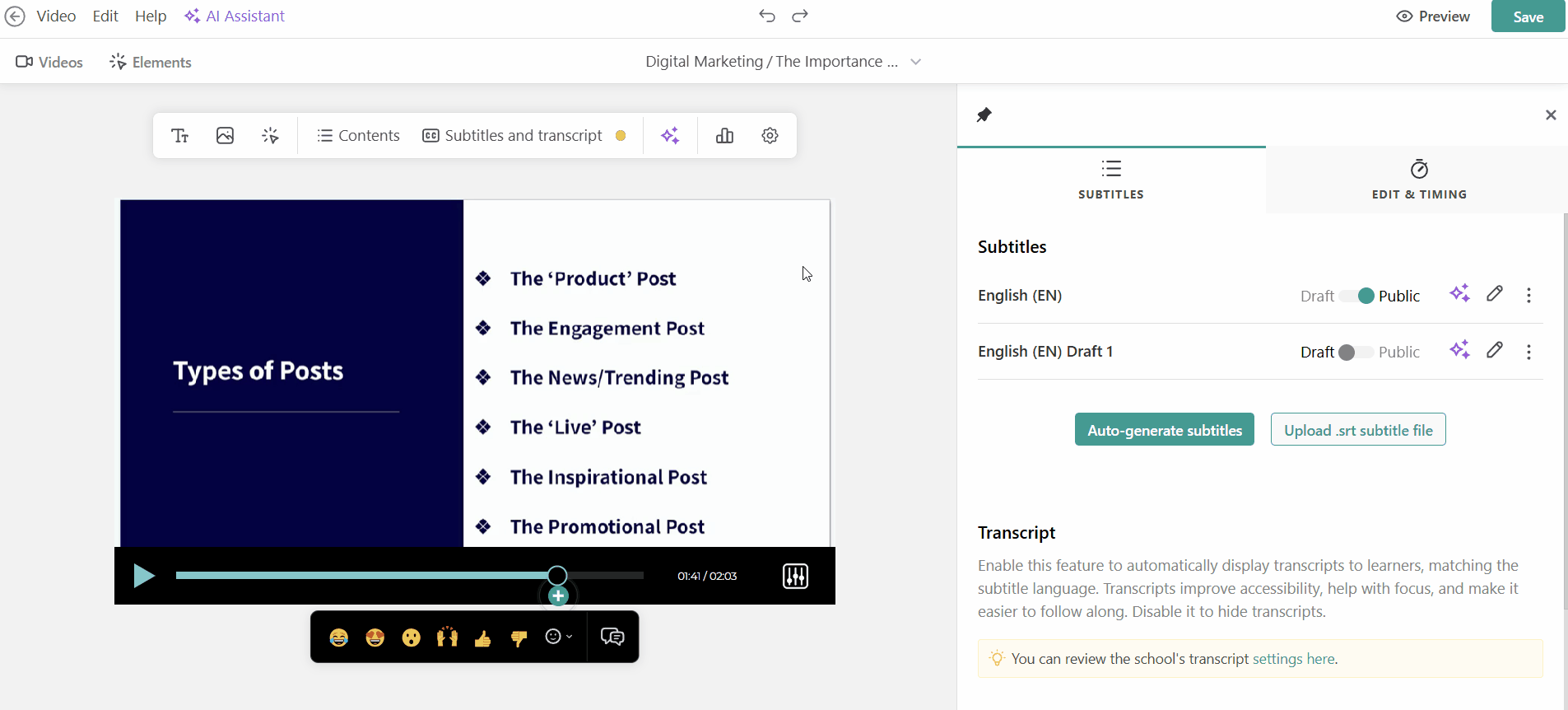
The German version and the Japanese version both trace back to one program, rather than two separate translation projects running on their own timelines.
Keep partner pages and FAQs current as the roadmap moves
A roadmap that outpaces enablement is what turns a strong partner program into a source of real partner frustration. It’s when you ship a feature, change a price, but then realize the partner-facing materials you’ve sent still describe last quarter’s product.
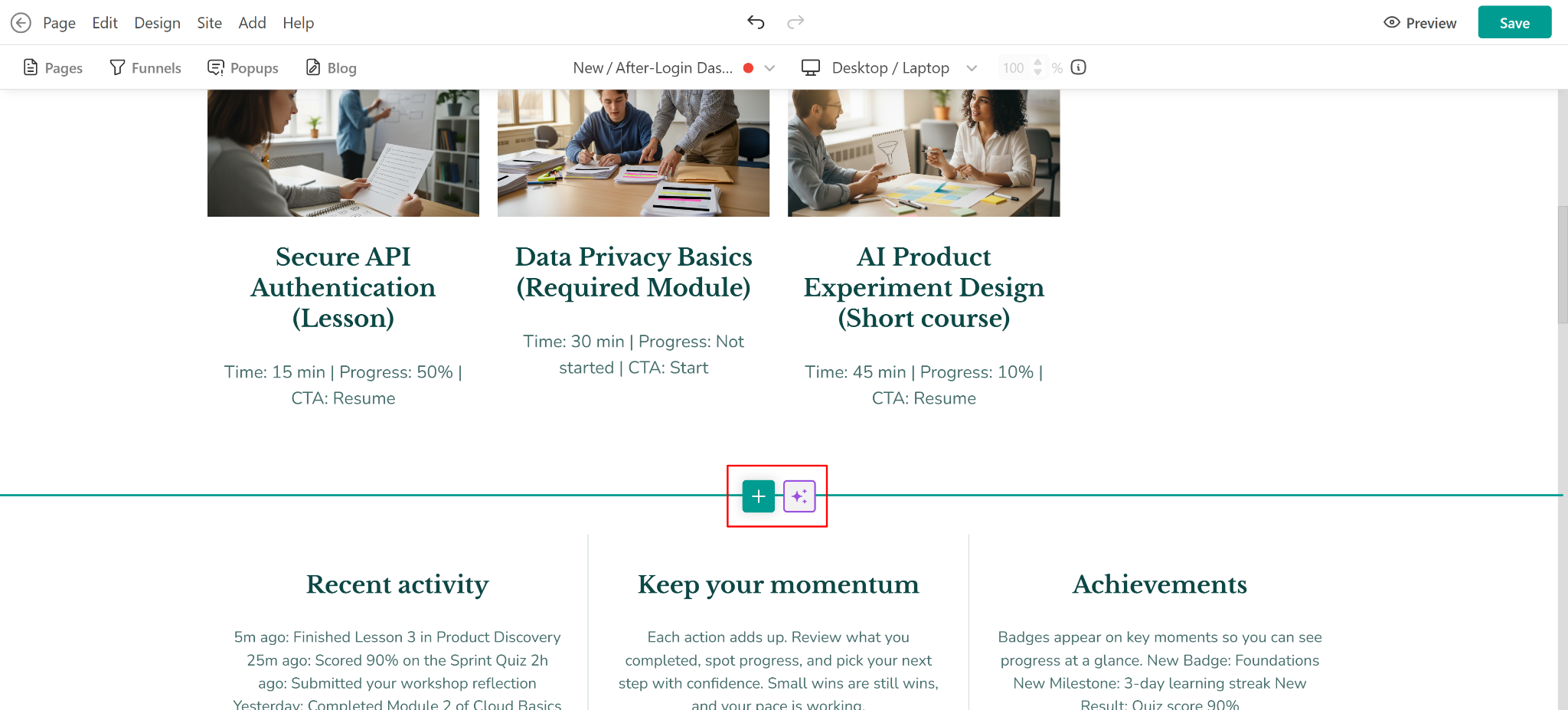
Section Editing presents you with a solution. It helps you update the specific part or section that changed without you needing to touch the rest of the program or its regional variants.
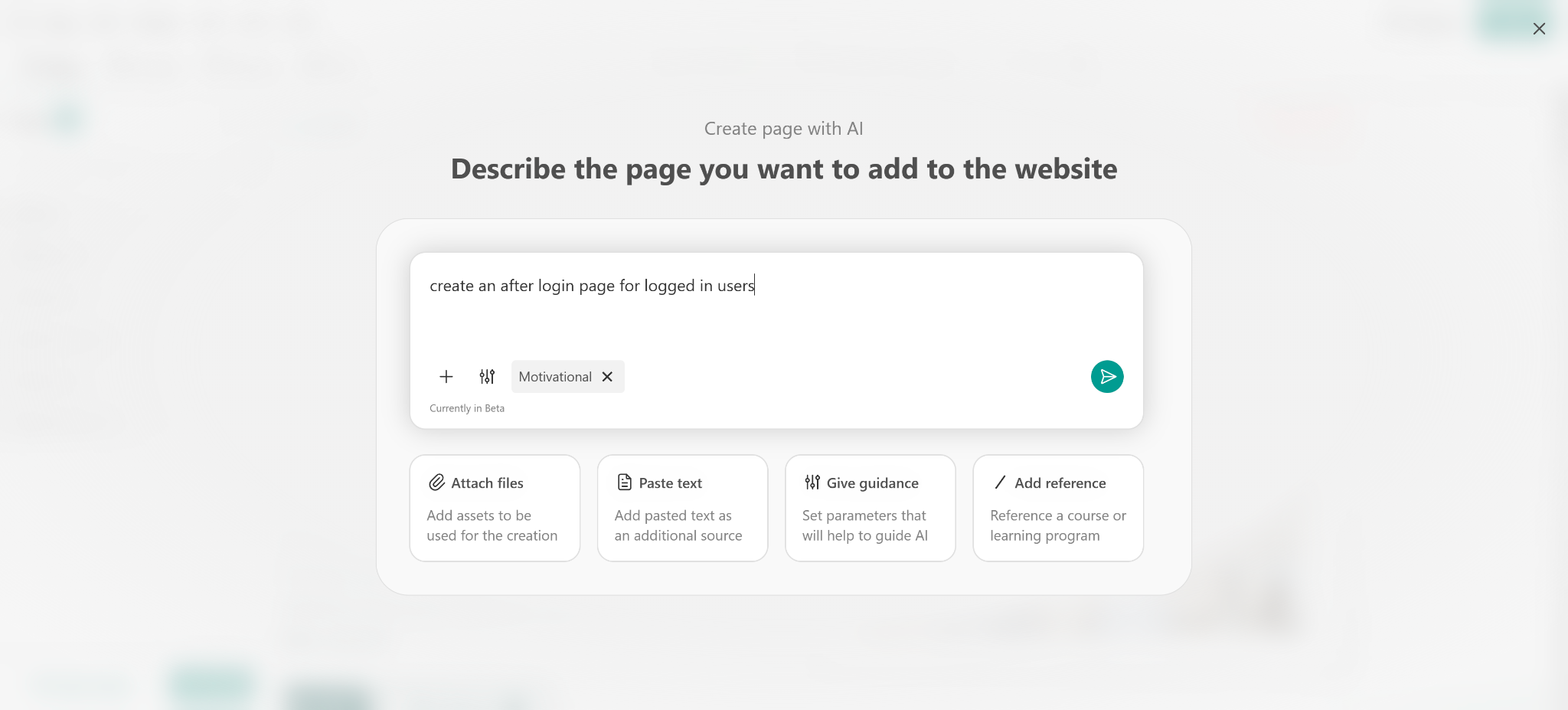
Because you’ve already added your context in LearnWorlds AI settings, you don’t have to repeat it every time. Whenever you use AI to create content across your school, it remembers that context and adapts the output accordingly.
In the same way, AI Pages keeps partner-facing pages aligned with that context, while Contextual FAQs helps you create partner-specific answers from the same current material. You’re no longer relying on a static document that someone forgot to update.
So when a partner asks a question, the answer reflects what’s true today, not what was captured in a PDF two releases ago.
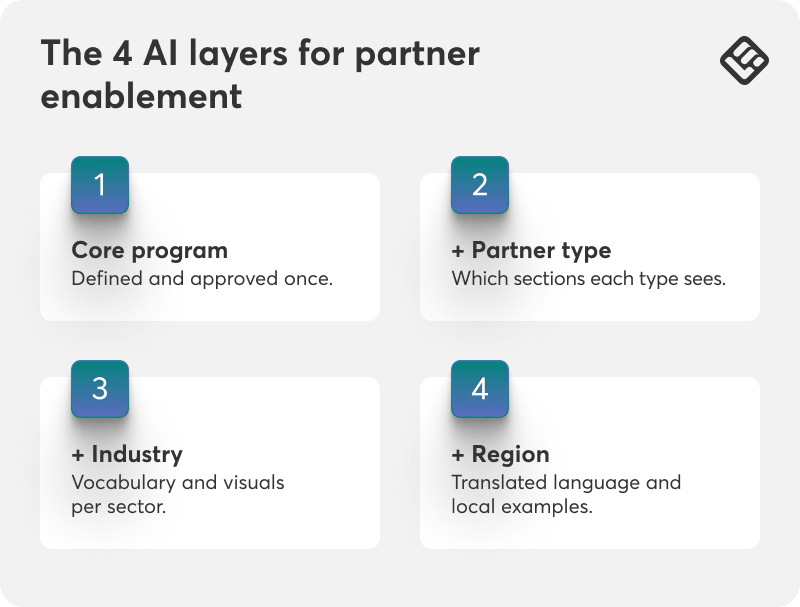
Each layer only adds what’s specific to it. Nothing below gets rebuilt to produce the layer above it.
💡For the full set of AI-powered content tools referenced throughout this post, see the Help Center’s guide to creating AI-powered content.
How much one program actually needs to change
Answering this question sets the ceiling on how much adaptation one program needs.
A SaaS vendor selling through referral partners has a narrower range of variation than a services-led business where partners deliver the programs themselves.
A wider range of partner-sourced revenue tends to track with a wider range of partner types and use cases to support, which is exactly where a single hand-maintained program starts to strain.
Start with the program you already have
Bring in whatever the current partner program already runs on, whether that’s a training deck, a certification course, or a set of enablement docs. Set the guidelines once, then generate the first partner-type or regional variant and see how much of it holds up without hand-editing.
LearnWorlds offers a 30-day free trial, no credit card required. Start your free trial and bring in the program you already run using LearnWorlds built-in AI features.