
Table of Contents
Employee training programs are one of the top benefits modern employers offer. In fact, 8 out of 10 employers [1] provide formal education either to upskill their employees or to keep their skills fresh.
But there’s more to that. Sharp skills translate into better performance, more opportunities for career advancement, and, therefore, higher job satisfaction. And make no mistake – a competent workforce that is also happy plays a huge role in the success of your business.
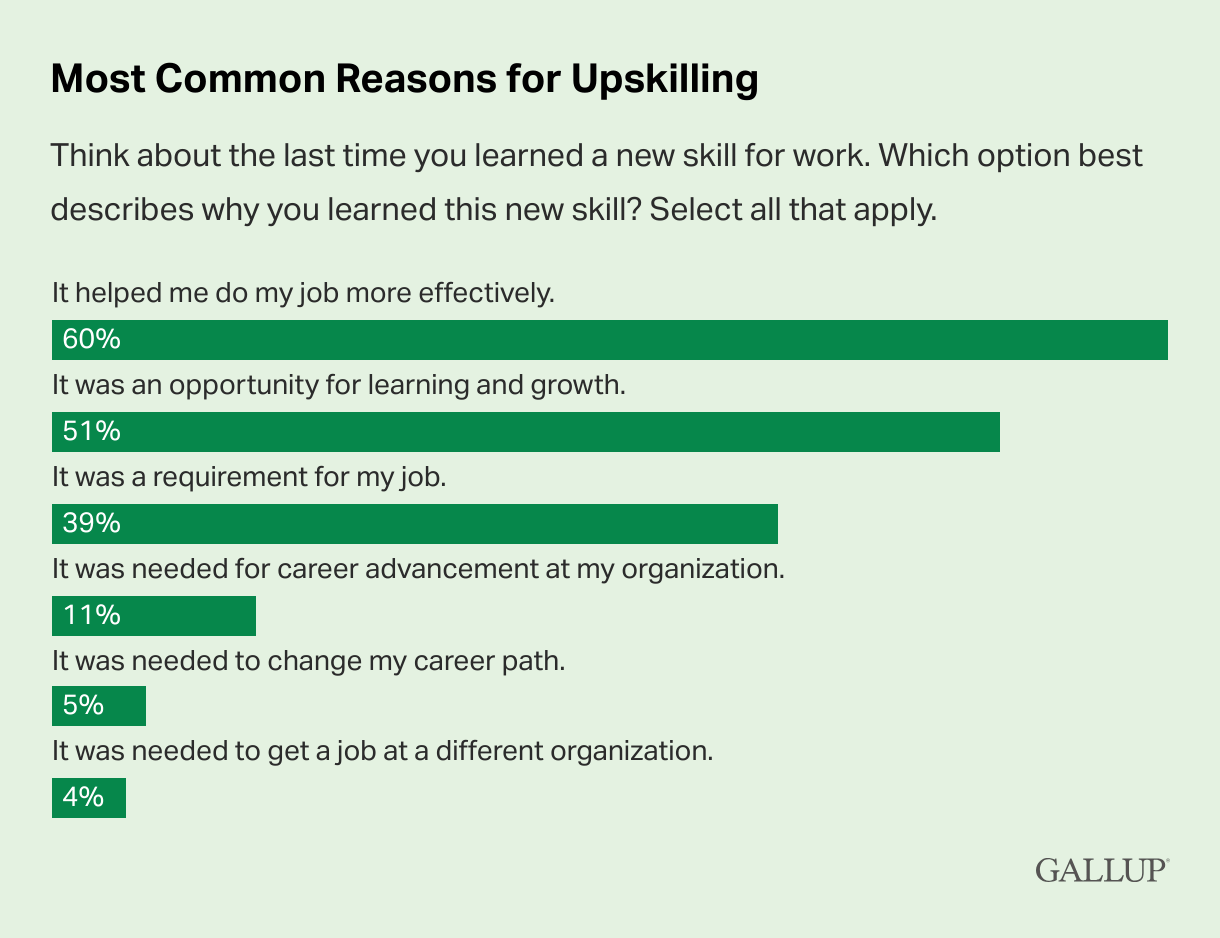
While you may already be on board with the idea of investing in your employees’ professional development, you might be under the impression that you don’t have the budget, expertise, or human resources to create an effective training program.
Today, we’ll show you how all of these issues are solvable, and that you can indeed design a training program for employees. (Hint: you probably already have more resources readily available than you think – we’ll talk about that, too).
15,000+ brands trust LearnWorlds to train their people, partners & customers.
What is a training program for employees?
A training program for employees is a program that is built to get the job done – literally. Having a structured plan to help people improve on specific skills and knowledge is a must to get employees performing at a high level. This can include learning materials, hands-on exercises, and setting goals to measure how far people have come.
And let’s be honest – one-off training sessions are just that – one-offs, and a formal training program is a much more strategic approach to learning for an organization. This is what aligns with what’s going on in the business – whether it’s improving performance, making sure everyone follows the rules, or driving innovation.
Having a good training program in place is a key driver of employee training and development, and it plays a huge role in boosting productivity and morale across the organization.
What are the benefits of designing a training program for employees?
By putting a training program together, you are giving your employees a clear path to grow and improve in their role, and at the same time, improve the bottom line for the company. According to IBM’s The Value of Training report, if your employees are well trained, they will be 10% more productive and up to 22% more profitable.
So here are a few benefits you can get from this:

Pro tip
20 common work training program models
Modern workplace training programs can come in all sorts of shapes and sizes, depending on what the company is trying to achieve and who’s involved. The key is to pick a style that’s going to engage your audience and actually help the learning stick.
Below are 20 of the most effective work training models that L&D teams swear by:
💡Keep learning: What is blended learning: Why it matters and how to apply it
Employee training vs. employee development: Key differences
Although often they’re used interchangeably, employee training and employee development are actually two distinct – yet perfectly complementary – concepts that serve different purposes within a company’s growth plans. When you put together a training program, it really is key to getting your head around these two ideas so you can hit both short-term performance targets and long-term talent development goals.
So, training is all about giving employees the skills they need to do their job right at the moment, while development is about getting them ready for the responsibilities and career growth that lie ahead. Both are super important pillars of a winning employee training and development strategy.
Training gets you the performance you need right now, while development gets you the leaders you need tomorrow. To be a successful organization, you need both. That way, your employees are not only meeting their current targets, but also helping your company achieve its long-term vision.
💡Keep learning: 19 training metrics you should be tracking to improve results
What makes an effective training program?
An effective training program is one that ticks all the boxes – meeting both the organization’s needs and the learners’ by genuinely boosting performance and keeping staff engaged through learning experiences that offer something meaningful.
When you build a training program, it’s about more than just pouring content at learners: you’ve got to create some real impact, get people fired up, and actually track and measure the results.
So what makes a training program really deliver?
Why you should deploy professional training online
First things first, we’re not in favor of an “either-or” approach. Online training is not always the solution. For instance, it can’t substitute hands-on practice for technical and manual tasks. Imagine training a construction worker how to operate a lift from the comfort of their home – would you like to be around when they try it in real life?
That said, online training fits the bill for technical and soft skills training programs. You can also support most types of on-site training with training material and activities, and create blended learning experiences.
Let’s see the benefits and use cases one by one 👉
Offer convenience and flexibility
Online courses are often self-paced or combine synchronous with asynchronous elements. The training material is available 24/7 and can be accessed from any device, provided there’s an internet connection. Employees can set their own schedule for learning inside or outside work hours without interrupting their workday. No uncomfortable daylong seminars, no unnecessary commuting.
Provide just-in-time training
Deskless employees, like salespeople or healthcare professionals, don’t have the same access to on-the-job training as everyone else does. Online, and mobile learning in particular, is the only way to support these employees when they’re on the job.
💡Read also:
Streamline and document training
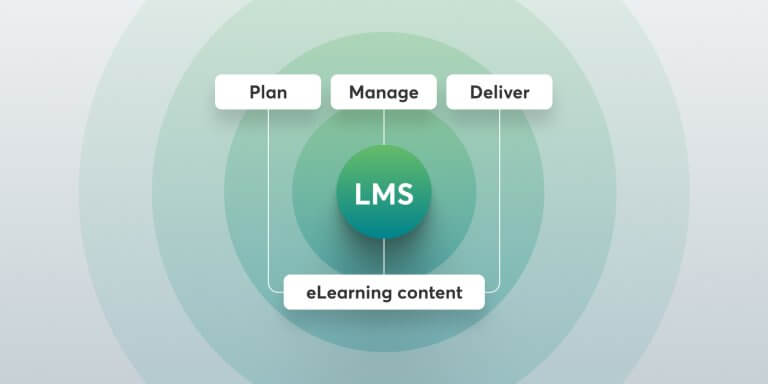
A Learning Management System (LMS) helps you streamline your efforts for training employees by providing the same quality training to everyone. On top of that, it allowed you to create your own learning hub – a centralized location with all the learning resources your employees need.
Trim your training budget
Your primary training goal is to help employees build their skills in the most effective way possible, so trimming your training budget shouldn’t be a determining factor unless online training makes sense.
That said, when you deploy training online vs in-person, you will save big on expenses like instructor fees, venue, accommodation, and transportation costs – not to mention the time lost from productivity.
Cater to diverse learning styles and needs
Online learning leaves more room for variety, which is especially beneficial for visual learners who prefer to take their time walking through the content. By including a mix of written, audio, and kinesthetic activities, elearning can provide comprehensive learning experiences for everyone.
Apart from preferences, employees also have different needs. Physical, learning, or cognitive disabilities might hinder some employees from keeping up or even participating in on-site training. Online courses are easier to work around and are accessible to everyone.
Easily update your content
Things move fast in the modern workplace. New products, new employees, new regulations, new skills, new information. With online professional training, it’s easy to keep your employees up to date without having to organize training events from scratch. All you need to do is upload updated elearning training content on your training platform.
Cultivate a learning culture
Online training is much easier both for the company to deploy and update and for employees to follow through. This means you can roll out new and diverse courses regularly and keep the momentum going.
15,000+ brands trust LearnWorlds to train their people, partners & customers.
Your 12-step guide for developing a training program
Let’s move from theory and unshakeable arguments pro online training to the actual planning and development phase. We have created a concrete 12-step mini-guide for developing a training program for you to follow.
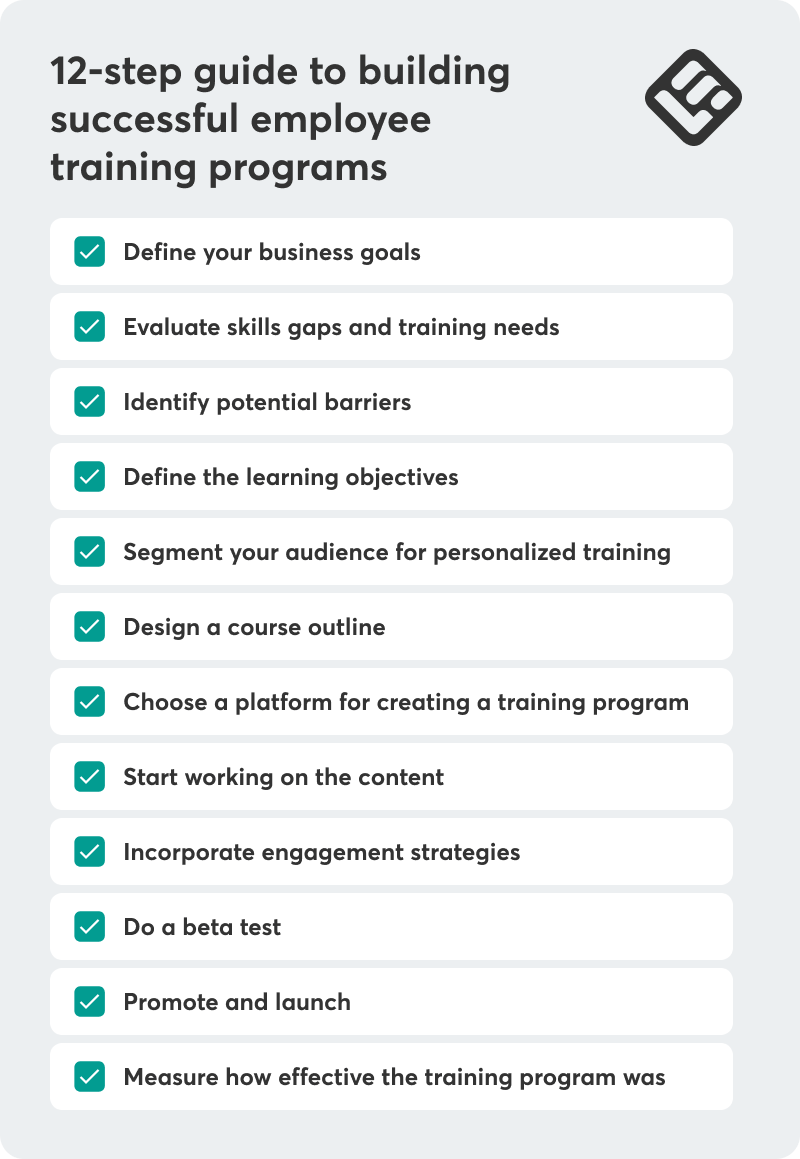
1. Define your business goals
Defining your business goals is the first step to design a training program. You don’t need to go wild here and plan for the next decade. Focus on what you want to achieve in the foreseeable future so that you can set specific and measurable goals.
🎯 Many businesses use the SMART methodology to define their goals:
Let’s say you’re a SaaS company. A SMART goal sounds like this:
“Increase our CSAT score by 5% by the end of 2024.”
Based on this goal, ask yourself: Which new knowledge and skills does your workforce need to help you achieve the goals? This brings us to the next step.
2. Evaluate skills gaps and training needs
In many cases, the problem might not be your employees but your processes or business strategy – even the tech you’re using, or your product. Therefore, before designing a training program, you must revisit and reevaluate all business operations linked to your goals.
At the same time, you need to conduct a training needs assessment. You have several options for this:
After you’ve received feedback from multiple sources, you should be able to figure out the skills gaps among your workforce and start planning your next training program to address these gaps.
💡Read also: What are the best types of assessments for online learning?
3. Identify potential barriers
Next, you should consider the challenges you may face as you deploy workplace training programs. Typically, these involve:
Keeping potential roadblocks in mind will help you design a program tailored to your needs, preferences, and capabilities and choose the training delivery method that best works for your company.
4. Define the learning objectives
Now, you have all the information that you need to start writing the learning objectives of the course. The learning objectives are a short but concise description of what employees will be able to do after they complete the training course.
Think of them as the Unique Selling Points of the course – the answer to the “What’s in it for me?” question. A quick tip is to avoid generic verbs like “learn or understand” and focus instead on action-oriented ones. Here’s what a learning objective sounds like:
By the end of this sales course, you’ll be able to:
Having defined the learning objectives, you can select the best activities that will bring learners closer to those and also the assessments that will effectively measure their knowledge.
5. Segment your audience for personalized training
Two employees don’t learn in the same way. Segmenting your learners allows you to tailor content to individual needs, learning style, and skill level – and this results in much stronger engagement and better outcomes.
To get the most out of segmentation, take the time to figure out the demographics, level of experience, and job functions of your workforce. Use that information to create learning paths that are directly targeted towards those groups. Think about it, onboarding programs are a whole different ball game compared to leadership or reskilling programs.
With personalized learning experiences, employees are free to learn at their own pace and hone in on the skills that are going to be most useful to them. And as a result, you get higher levels of staff satisfaction and better knowledge retention.
6. Design a course outline
With a course outline, you’ll create a roadmap and organize your content into learning modules. A course outline will help you create the course sequence and define the much-needed knowledge checkpoints and reward systems.
Designing a training program is not always simple because the learning process is not. If your requirements are complex, you might need to outsource content creation or hire an instructional designer.
If you don’t have an instructional design expert on your team, don’t hesitate to consult one. It’s best to spend some more money now and get the job done right than develop a program that misses the mark.
Visit the LearnWorlds Experts Directory to discover qualified elearning professionals who can help you build your training course.
💡Read also: 5 best practices for optimizing your online course structure
7. Choose a platform for creating a training program
According to a survey conducted by Training Magazine, Learning management systems remained the most popular learning technology used in 2023.
This comes as no surprise: an LMS helps you organize and distribute your training content with significantly fewer hassles and costs compared to other solutions. In addition to that, LMSs support diverse content types and enable you to create professional training that has an impact.
Depending on your specific needs and the type of training, your requirements may differ. For example, if you want to conduct live sessions, you should look for a platform that directly integrates with a video conferencing tool. If you need to train deskless employees, you need an LMS with a mobile app, and so on.
Even if you don’t know the exact features to look for, by describing your requirements to the LMS vendor, they should be able to demonstrate they can address those needs.
In the meantime, here are some important considerations for every company:
Download our LMS proposal template
8. Start working on the content
If you decide to develop the training program for employees in-house with L&D teams, we have two words of advice for you before you even get started:
The first is to identify team members with expertise in the course topic. Use them as your Subject Matter Experts to organize mentoring sessions or advise on course creation.
Second, use content you already have. Yes, even those dreaded PowerPoint presentations can be turned into something more exciting, like an ebook. A webinar can also be turned into a series of videos, and so on. Think about what you already have before you start building content from scratch.
In the meantime, some popular types of content to include in your course are:
Remember that every learning activity must be relevant to the training objectives and, whenever possible, reinforce real-life application. Avoid overloading your employees with nice-to-have information because this will hurt their capacity to absorb even necessary knowledge.
If possible, add live instructor-led training sessions during which you can explore case studies and real-world examples, dive deeper into the topic, answer questions, and practice with role-playing exercises to improve knowledge retention. Leverage discussion boards and community features to enable employees to share knowledge and engage in discussions.
Want to know more about how to create personalized learning experiences? Watch our free webinar:
9. Incorporate engagement strategies
Even the best content can sink unless learners are actively engaged. To make your workplace training programs a success, you’ve got to incorporate strategies that capture people’s attention, get them participating, and help them connect with the material on an emotional level.
Here are a few ways to increase student engagement in online learning:
Pro tip
10. Do a beta test
Before launching your work training program, take one final look through the eyes of others. Create a small team of employees who will access the course while it’s still in draft mode, then conduct a group discussion to get their feedback.
11. Promote and launch
Does an internal training program need to be promoted? Yes. You need to help employees see the value they can get from it. You need to make a commotion and let enthusiasm spread among your employees.
Therefore, a couple of weeks before you launch the course, send an email or post an announcement to let employees know that the course is ready. Share a sneak peek and highlight perks for course participants, like paid time off or a special reward for top performers. Most importantly, explain how the course is linked to career opportunities.
💡Read also: A quick 5-step checklist to successfully launching an online course
12. Measure how effective the training program was
Typically, a training program ends when employees have finished the course successfully. But the most important thing is the aftermath. A training program always leaves you with important questions to answer:
Answering these questions requires a systematic approach: launch employee surveys and interviews, check your LMS reports, measure your KPIs, and discuss with managers.
It’s pretty much what you did before designing the program to evaluate your needs – only now you have more sources to collect data, and the focus is different. You also need to remember that business KPIs take a while to improve and that, usually, there’s more than one factor at play.
💡Read also: Online course evaluation surveys: 3 smart ways to get course feedback
10 training program examples
Every organization has its own set of unique requirements, but a few training program examples have shown real results across all sorts of different industries. These examples show how you can put together a training program that really fits with what your company is trying to achieve and keeps employees motivated and ready for whatever the future holds.
1. Onboarding training
This type of training introduces new starters to your company culture, procedures, and tools – the kind of things you need to know before you can get on with your job.
2. Compliance training
This type of training ensures your staff know and understand all the workplace rules, the law, and important safety information.
3. Management training
Training for people who are aspiring to be managers or are currently in charge – this helps with leadership and decision-making skills.
4. Sales training
Training for the sales team to get them up to speed on the products they sell – all the key features and how to sell them.
💡Read also: How to deliver effective sales training with LearnWorlds
5. Customer service training
This training is all about how your staff should be interacting with customers – how to handle complaints and make sure they’re happy.
6. Product training
Training for people who need to know all about the new products you’re launching – the different features and how they work.
7. Diversity and inclusion training
This type of training, also called DEI training, is all about getting your staff to be more aware of cultural differences and to promote a culture of inclusion.
8. Remote work training
Remote training is for people who are working from home or in an office with lots of other people, and you need to make sure they know how to work well with each other effectively regardless of distance.
9. Technical or software training
This type of training is all about making sure your staff know how to use all the new software and tools that are coming out.
10. Reskilling and upskilling programs
This is all about training people as part of an employee upskilling program to develop new skills they need to know, or getting them to learn new things to future-proof your workforce.
💡Thinking about using an LMS for upskilling? Find out why it is the best solution.
Launch training to improve employee performance with LearnWorlds
Offering continuous education has multiple benefits for a company. Your employees are the building blocks of your business – and no business can go far unless it keeps its employees’ skills current and the employees themselves happy with their jobs.
LearnWorlds for employee training is an excellent choice for your initiatives. Our platform is a lightweight LMS you can implement in a few hours and even launch your branded mobile app, supercharged with an advanced AI assistant with built-in prompts.
Scalable and flexible, LearnWorlds is fully white-labeled, SCORM compliant, offers multiple integrations and API, customer user roles, and real-time access controls, and poses no limits to the number of courses or users you can have.
We could go on for a while. Why don’t you leverage our 30-day free trial to discover the amazing capabilities of LearnWorlds to design a training program?
15,000+ brands trust LearnWorlds to train their people, partners & customers.
Sources
[1] 2023 Employee benefits survey: Executive summary[2] Employee upskilling is vital in rapidly-evolving job market

Androniki Koumadoraki
Androniki is a Content Writer at LearnWorlds sharing Instructional Design and marketing tips. With solid experience in B2B writing and technical translation, she is passionate about learning and spreading knowledge. She is also an aspiring yogi, a book nerd, and a talented transponster.

Kyriaki is the Organic Content Strategist at LearnWorlds, where she writes and edits content about marketing and e-learning, helping course creators build, market, and sell successful online courses. With a degree in Career Guidance and a solid background in education management and career development, she combines strategic insight with a passion for lifelong learning. Outside of work, she enjoys expressing her creativity through music.
 Back to blog
 Scroll to top
FAQ
Everything you have ever wondered, but were too afraid to ask...

Related Articles